Leave Your Message
-
 Online Message
-
 Phone:+8613927702137
-
 E-Mail: kleanesp@kleanland.com
-
 Whatsapp: +8613927702137
Online Message Phone:+8613927702137
E-Mail: kleanesp@kleanland.com Whatsapp: +8613927702137 Let’s be honest—an air handling unit isn’t exactly the kind of thing you daydream about. But over the years, that same AHU can quietly make or break your indoor comfort, your energy bills, and how much maintenance you’re constantly dealing with. If you’re buying from overseas, it’s tempting to just compare airflow and price and call it a day. But there’s more to it. Pick a unit that’s sized for the wrong climate, and you’ll be fighting humidity before you know it. And if you choose a Filter without checking the pressure drop, well, your fan’s going to work harder and eat more energy. The little details really do matter.
Looking at the International Energy Agency’s Buildings report, building operations accounted for something like 30% of global final energy consumption back in 2022, plus around 26% of energy-related emissions. That’s pretty significant. So when you hear efficiency claims, it’s worth checking them against actual test conditions — not just the shiny numbers in a brochure. ASHRAE Standard 62.1 is another good reference; it lays out technical guidance on ventilation and what acceptable indoor air quality really means. And then there’s the healthy-buildings expert Dr. — You know, Joseph Allen once said that buildings are the most important infrastructure of our lives. And honestly, that really hits home when you’re thinking about AHU procurement — because the equipment you pick ends up shaping the everyday spaces where people live, work, and hang out.
Okay, so these seven tips? They're basically a checklist for anyone comparing Industrial Air Purification systems. You'll look at capacity, filtration, controls, how easy it is to service, certifications, and whether the supplier's actually going to support you after the sale. Plus, they tie theIndustrial Air Purification side of things to real-world operating costs — not just the sticker price. And here's the thing: a spec sheet can look totally thorough, but then you realize there's no easy way to clean the coils or no replacement filters available down the road. It happens more often than you'd think. Honestly, there’s no single model that’s going to fit every project. And just because a quote is the cheapest doesn’t mean it’s the best — sometimes the assumptions behind it are pretty unclear. So it’s worth sitting down with qualified engineers to go over the details, and then double-checking that the performance actually holds up under the real site conditions.
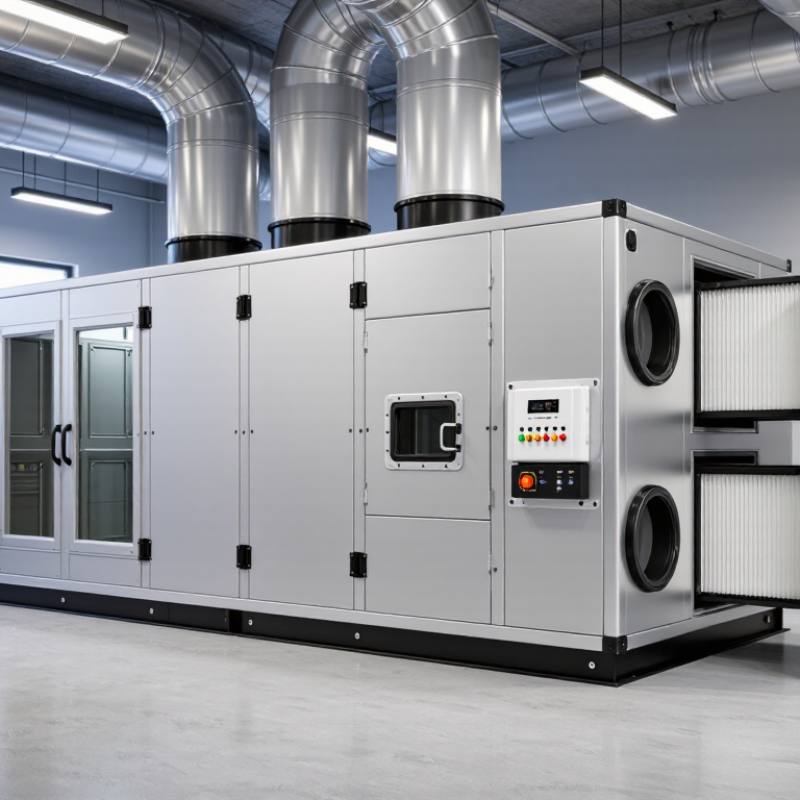
Before comparing air handling units, write down what the building actually needs. Record room sizes, occupancy, operating hours, and the outdoor design temperatures. A workshop running one shift has a different load from a clinic operating all day. Measure existing airflow where possible; old drawings may not reflect later renovations. Small details matter.
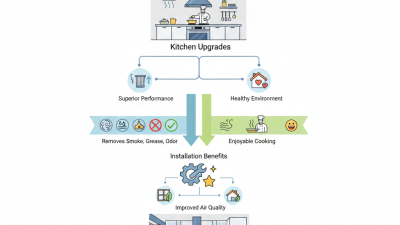
Check the required supply-air volume, external static pressure, filtration level, and indoor humidity range. Include heat from lighting, equipment, and people, not just floor area. If the unit serves a kitchen, note grease, odors, and cleaning access. A Kitchen Air Cleaner may address specific contaminants, but it does not replace properly sized ventilation. Confirm how exhaust and replacement air will interact.
Conditions change by season. Ask suppliers to state their assumptions for summer and winter, including entering-air temperatures and filter pressure drop. Leave room for filters, coil cleaning, and motor access; a compact unit can become awkward to maintain. Measure the installation route, too. Doors and corridors can be restrictive. Recheck figures with the facility team before approving a selection, especially if occupancy or schedules are uncertain. That uncertainty is worth documenting, not hiding.
Use this planning checklist to prepare a request for quotation. The example values are illustrative, not universal design targets; confirm final requirements with the project engineer and applicable local codes.
| Tip | Requirement to Define | Example Project Information | What Buyers Should Confirm |
|---|---|---|---|
| 1 | Building use and occupancy | Office, school, hotel, healthcare space, or industrial area; operating hours; typical and peak occupancy; ventilation schedule. | Provide room use and occupancy patterns so the designer can establish outdoor-air, zoning, and operating requirements. Do not size the unit from floor area alone. |
| 2 | Airflow and outdoor-air fraction | Specify supply airflow in m³/h or L/s, required outdoor airflow, return-air arrangement, and any exhaust or make-up-air relationship. | State the design airflow and the conditions under which it applies. Have the ventilation rate determined for the occupancy, local regulations, and system design. |
| 3 | Indoor conditions and thermal loads | List desired indoor temperature and humidity ranges, seasonal operating modes, and sensible and latent cooling or heating loads, where available. | Share a load calculation or design brief. Identify whether humidity control, reheat, heat recovery, or separate heating and cooling operation is required. |
| 4 | Outdoor design conditions | Give project-location summer and winter design dry-bulb temperatures, and wet-bulb or humidity conditions where relevant. Include altitude if the site is elevated. | Use conditions selected for the project location and applicable design criteria, not annual average weather. Confirm their effect on coil capacity, airflow, and fan performance. |
| 5 | Duct resistance and fan duty | Provide the required external static pressure in Pa, duct layout or pressure-loss estimate, terminal devices, and any allowance for filters or accessories. | Ask for fan selection at the specified airflow and pressure, with installed accessories accounted for. Review fan power and sound data at the actual operating point. |
| 6 | Filtration and air quality | Describe expected dust or contaminant levels, required filter classification under the project's chosen standard, and any pre-filter or final-filter stages. | Specify the filtration standard and target class rather than using a generic label. Confirm clean and final resistance, filter dimensions, access, replacement availability, and any monitoring requirement. |
| 7 | Utilities, controls, and installation limits | List available voltage, phase, and frequency; control-system interface; installation location; access route; space limits; ambient exposure; and service clearances. | Confirm electrical compatibility, control points and communication needs, casing and corrosion requirements, condensate drainage, lifting or access constraints, and maintenance access before ordering. |
Gas air filtration and heat recovery can work together to improve the efficiency of a stenter machine. During textile drying and heat-setting, the machine exhausts warm air that may contain lint, dust, and other process residues. A suitable filtration stage helps capture airborne particles before the exhaust stream reaches heat-recovery equipment. This supports cleaner operation and helps protect heat-transfer surfaces, while allowing the system to recover useful thermal energy from the outgoing air.
A stenter waste heat recovery system reuses recovered heat to preheat incoming process air or support other heating needs. By reducing the amount of fresh energy required to reach operating temperatures, it can help lower fuel consumption and production costs. The combination of filtration and heat recovery also helps reduce wasted heat and associated environmental impacts, making it a practical approach for textile and dyeing facilities seeking more efficient operations.
To maintain dependable performance, filtration and heat-recovery equipment should be selected to suit the exhaust temperature, airflow, and characteristics of the production process. Regular inspection and cleaning help maintain airflow and heat-transfer effectiveness, supporting stable stenter operation and consistent energy savings.
Maximum airflow may not reflect performance with long ducts or loaded filters. Compare airflow at your design static pressure. Real conditions matter.
Compare filter efficiency, pressure drop, replacement intervals, and service space. Tighter filters can increase fan energy and operating costs. More filtration is not always better.
Request airflow and power data at several operating points. Confirm the figures include fans and controls, and ask how performance changes as filters load.
Ask for test records, component details, and references from similar buildings or climates. Compare data under matching conditions. A polished quote proves little.
Check coil rows, filter grades, casing dimensions, controls, and service clearances. Confirm who approves revisions and how changes affect delivery time.
Ask about spare parts, commissioning help, remote troubleshooting, and response times across time zones. Get commitments in writing. Assumptions can fail.
Separate equipment, controls, installation, freight, duties, and commissioning costs. Confirm who handles unloading and damage checks. The low offer may not stay low.
Compare energy use, filter availability, maintenance access, and replacement intervals against the building’s schedule and climate. Review service clearances with maintenance staff. I might still miss something.
Choosing an air handling unit begins with a clear understanding of the project’s purpose, building conditions, climate, occupancy, and operating schedule. These requirements help determine the right unit configuration and the airflow capacity, filtration level, and energy performance needed for reliable indoor comfort. Buyers should also confirm that the proposed equipment meets the standards and certification requirements applicable to the project’s destination and installation environment.
A thorough supplier evaluation should consider technical expertise, customization options, warranty coverage, spare-parts availability, and after-sales support. Beyond the purchase price, compare delivery arrangements, installation needs, maintenance costs, and expected service life to understand the total cost of ownership. Assessing these factors together helps global buyers select an air handling unit that fits their operational needs, supports efficient long-term performance, and offers sound overall value.