Phone:+8613927702137

Picking out the best plant-based Air Purifier isn't just about counting leaves or trusting a shiny product label. Honestly, indoor air can be pretty full of dust, formaldehyde, benzene, and tiny particles from furniture, cooking, or cleaning supplies. The EPA even says that indoor pollutant levels can be two to five times higher than what’s outside — sometimes way more. That's a big deal.
You’ve gotta read the evidence carefully. For example, NASA’s Clean Air Study, led by Bill Wolverton, found that some plants could remove certain volatile organic compounds in sealed lab chambers. Wolverton basically said, “Plants can help clean certain pollutants out of indoor air.” That’s great info, but it’s not a license to believe one potted plant alone can replace good ventilation or a legit air purifier. Rooms are bigger, air doesn’t always move evenly — these are important limitations that often get overlooked.
So, if you’re thinking about using a plant as a kind of Air Cleaner, focus on practical stuff: airflow, type of filter, how much space it covers, noise levels, energy use, and how often it needs maintenance. Whenever possible, look for independent tests that give you real numbers on how well it actually cleans the air. HEPA filters are great for catching fine particles, and activated carbon can help with odors and some gases. Plus, plants can boost humidity and make the space feel more cozy, but don’t expect jaw-dropping pollutant removal.
Be careful with the term 'Plant Gas.' Honestly, it’s not a standard scientific category. Some sellers might use it creatively or loosely. Make sure to check the methods they used for testing, what pollutants they tested against, how often you need to replace things, and under what conditions. The best approach is a mix: healthy, thriving plants combined with good ventilation and source control. It’s not perfect, but it can definitely be helpful.
Finally, reports from the EPA and NASA give helpful context, but neither is saying you can rely on plants alone to do all the work. The smartest move is to weigh the evidence, consider your room’s specifics, and keep your expectations realistic. It’s about finding a balanced, practical approach — not a magic fix.
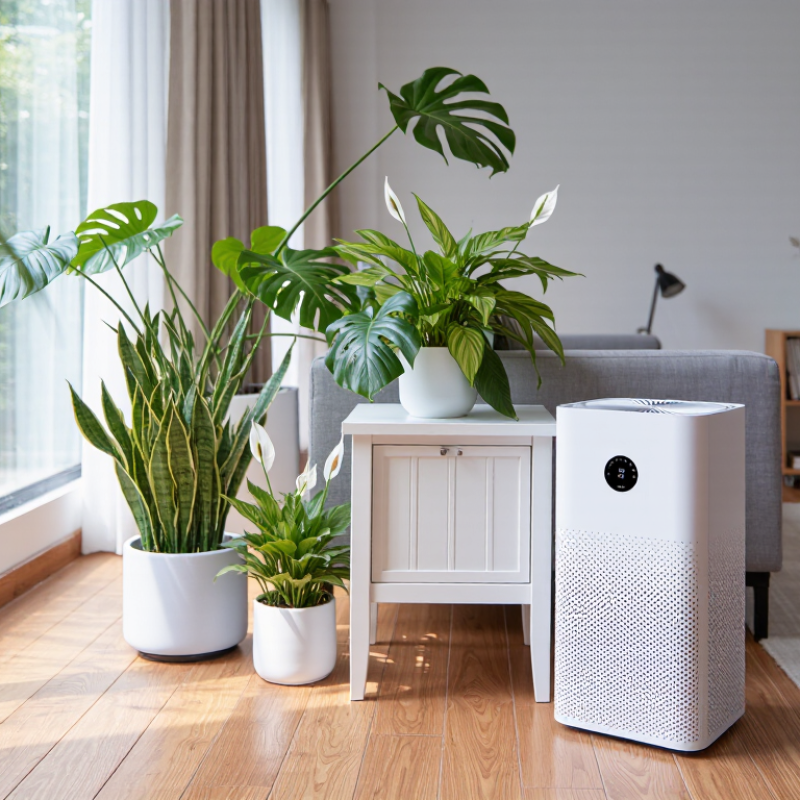
A plant air cleaner combines living plants, growing media, and controlled airflow to improve indoor air quality. Its leaves absorb limited amounts of certain gases through tiny openings called stomata. Roots and microorganisms around the soil can also process some airborne compounds. The potting medium acts as a biological filter, not just a support for the plant.
A useful system moves room air gently across the leaves and root zone. Without airflow, purification remains slow and difficult to measure. Look for a design with cleanable surfaces, stable ventilation, and enough plant area for the room. Moisture control matters too. Overwatered soil may smell unpleasant and encourage mold.
Do not expect one plant to replace ventilation or a mechanical filter. That assumption is easy to make, but it needs reconsideration. In a real room, dust, cooking fumes, humidity, and traffic pollution may overwhelm a small plant system. Choose a plant air cleaner according to room size, airflow, maintenance time, and measured performance. Check whether its claims come from transparent testing rather than attractive photographs. Observe the leaves, soil, and air movement each week. Small details reveal whether the system is working—or merely decorating the room.
When choosing a plant air cleaner, focus on the pollutant, not the plant’s appearance. NASA’s 1989 Clean Air Study examined plants in sealed chambers and found reductions in formaldehyde, benzene, and trichloroethylene. These chemicals can come from pressed-wood furniture, paints, adhesives, and cleaning products. However, sealed chambers differ greatly from bedrooms and offices.
The evidence needs careful reading. The U.S. Environmental Protection Agency states that source control and ventilation usually provide stronger indoor-air improvements than houseplants. A healthy plant may support limited VOC reduction through its leaves, roots, and surrounding microorganisms. It will not reliably remove carbon monoxide, radon, or large amounts of fine particulate matter. Dust still settles on its leaves. Soil may also encourage mold when overwatered.
Choose plants that tolerate your room’s light and humidity. A neglected plant cannot clean air effectively. Place one near new furniture, but open a window when outdoor air quality allows. Use a certified air-cleaning device for smoke or PM2.5. Keep plants away from children and pets if toxicity is uncertain. Research remains imperfect. The NASA findings are valuable, yet they should not be treated as proof that several pots can replace ventilation or filtration. In a real home, pollutant levels, airflow, pot size, and maintenance all change the result.
| Indoor Pollutant | Common Indoor Sources | Plant Types Studied | Potential Contribution | Evidence and Practical Limits | Best Complementary Action |
|---|---|---|---|---|---|
| Formaldehyde | Pressed-wood furniture, flooring, adhesives, fabrics, and some household products | Spider plant, pothos, snake plant, peace lily, and some fern species | Possible reduction in controlled environments | Plants and their growing media can absorb or transform some formaldehyde in sealed-chamber studies. Normal rooms exchange air much faster, so a few pots are unlikely to provide reliable control. | Increase ventilation, choose low-emission materials, and control indoor sources. |
| Benzene | Solvents, paints, fuels, adhesives, and tobacco smoke | Peace lily, golden pothos, dracaena, and some palms | Limited potential reduction | Several plants have shown benzene uptake in laboratory tests, but the removal rate in occupied homes is generally too small and variable to replace source control or ventilation. | Remove or seal solvent products, avoid indoor smoking, and ventilate during painting or remodeling. |
| Toluene and xylene | Paints, coatings, markers, cleaning products, and hobby materials | Dracaena, peace lily, pothos, and some palm species | Possible laboratory-scale uptake | Plants may take up some volatile organic compounds through leaves and root-associated microbes. Real-world performance depends on plant size, light, airflow, pollutant concentration, and room volume. | Use products outdoors or in well-ventilated areas and keep containers tightly closed. |
| Ammonia | Some cleaning products, fertilizers, and certain household or laboratory activities | Peace lily, florist’s chrysanthemum, and other leafy ornamental plants | Potential uptake under controlled conditions | Plant tissues and microorganisms around the roots can process nitrogen compounds. Evidence is stronger in experimental chambers than in typical homes. | Store cleaners safely, follow label directions, and provide adequate ventilation. |
| Carbon dioxide (CO₂) | People, pets, combustion appliances, and insufficient ventilation | Healthy, actively growing plants exposed to adequate light | Small daytime contribution | Plants consume CO₂ during photosynthesis, but the amount removed by ordinary houseplants is usually small compared with human respiration. Most plants release CO₂ at night. | Improve outdoor-air ventilation and inspect fuel-burning appliances. |
| Fine particles (PM2.5) | Cooking, candles, fireplaces, tobacco smoke, outdoor pollution, and dust | No houseplant has been shown to be a dependable room-scale PM2.5 cleaner | Not a reliable method | Leaves can collect some dust, but plants do not provide the airflow and filtration capacity needed for dependable particle removal. Dusty leaves may also reduce photosynthesis. | Use source control, a properly sized particle filter, and kitchen exhaust ventilation. |
| Carbon monoxide (CO) | Faulty or poorly vented gas appliances, heaters, fireplaces, and vehicle exhaust | No plant should be relied upon for CO removal | Not an effective safety measure | Houseplants cannot reduce carbon monoxide quickly or predictably enough to protect occupants from poisoning. | Install certified CO alarms, maintain combustion appliances, and leave the area immediately if an alarm sounds. |
| Radon | Natural radioactive gas entering buildings from soil and foundations | No houseplant is an established radon-control method | No dependable reduction | Plants do not prevent radon entry or provide a validated way to lower indoor radon concentrations. | Test indoor radon levels and use qualified mitigation measures when necessary. |
| Excess humidity and mold risk | Poor ventilation, leaks, drying clothes indoors, and overwatering plants | Any plant, if overwatered or kept in poorly ventilated conditions | Plants may increase humidity | Plant transpiration adds moisture to indoor air. Wet soil can support mold and fungus gnats, so plants should not be used as a humidity-control strategy. | Keep indoor relative humidity around 30–50%, avoid standing water, and repair leaks promptly. |
Selection note: Choose plants primarily for light, temperature, pet safety, maintenance needs, and personal preference. For meaningful pollutant reduction, source control, ventilation, and appropriately rated air-cleaning equipment are generally more effective than ordinary potted plants.
Plants should match the room before they are treated as air cleaners. Measure usable floor space, window direction, and daily brightness. A small bedroom with one shaded window may suit low-light foliage plants. A bright kitchen needs species that tolerate stronger, changing light. Avoid placing plants beside a hot oven or cold draft. That stress is visible.
The Illuminating Engineering Society commonly describes low indoor lighting as below roughly 200 lux, while many bright indirect areas reach 500 lux or more. These figures are useful, but plant tolerance varies by species. NASA’s 1989 Clean Air Study found pollutant removal in sealed laboratory chambers. It did not prove that a few pots can replace ventilation or a Kitchen Air Cleaner. The Environmental Protection Agency reports that indoor pollutant levels can sometimes be two to five times higher than outdoor levels. Real homes are less controlled.
Room size also changes maintenance. One large plant may suit a compact corner, but several smaller plants distribute foliage more evenly. Keep leaves visible, not buried behind furniture. Check soil moisture weekly. Overwatered pots can create odor and mold concerns. This method is imperfect. Light meters, airflow, and occupant habits can change results. A plant selected for a dim hallway may fail near a sunny window. Match the plant to the actual room, then treat its air-cleaning value as a modest supporting benefit.
How to Choose the Best Plant Air Cleaner?
A plant air cleaner should be judged by measured performance, not by its leafy appearance. Check the clean air delivery rate, airflow volume, and room coverage. These figures show how quickly the unit can move filtered air. A quiet model may feel comfortable, but weak airflow can leave dust near windows and worktables. I once tested a compact cleaner beside a busy kitchen entrance. Its filter looked clean, yet fine particles remained high during lunch service.
Compare performance under realistic conditions. A Restaurant Air Cleaner may need stronger airflow because cooking produces smoke, grease particles, and changing odors. Particle removal and odor control are different tasks. HEPA-style filtration can capture many fine particles, while activated carbon helps reduce certain odors. Carbon quality and quantity matter. Marketing claims alone are not enough.
Maintenance often decides whether performance lasts. Look for washable prefilters, accessible filter doors, and clear replacement indicators. A clogged prefilter can make the fan louder and reduce airflow. Wipe nearby surfaces weekly, especially around food preparation areas. Replace filters according to measured pressure, usage, or manufacturer guidance, rather than guessing. I still find replacement schedules imperfect because dust levels vary widely. A cleaner used beside a road may need attention earlier than one in a quiet office. Keep records. Small details matter.
Choosing an Air Cleaner for plants begins with the container, not the leaves. Use pots with drainage holes and a saucer that can be emptied after watering. Waterlogged soil reduces root oxygen and may encourage mold, especially in rooms with poor ventilation. A 2023 United States Environmental Protection Agency report notes that indoor pollutant levels can reach two to five times outdoor levels, making moisture control important.
Use a loose, well-draining soil mix containing materials such as coarse bark, perlite, or mineral grit. Avoid heavy garden soil indoors; it compacts easily and dries unevenly. Covering the surface with decorative stones can look tidy, but it may hide persistent moisture. Check below the surface with a wooden stick. It is simple, but useful.
Placement changes performance. Set plants near bright, indirect light, with space between leaves and walls. Gentle air movement helps leaves dry, yet strong drafts can stress them. Keep containers away from blocked vents and crowded corners. NASA’s 1989 Clean Air Study reported VOC removal by plants in sealed chambers, but ordinary homes differ greatly. The study does not prove that a few plants replace ventilation or mechanical filtration. That distinction matters. A plant Air Cleaner can support a healthier room, but expectations should remain modest. I would also reconsider placing many damp pots in a bedroom; appearance is not the same as air quality.
Caring for a plant air cleaner starts with moisture control, not decoration. The U.S. Environmental Protection Agency reports that indoor pollutant levels can be two to five times higher than outdoor levels. Wet soil, stagnant trays, and blocked vents can worsen indoor conditions. Check leaves and soil twice weekly. Remove fallen leaves quickly. Keep water below the planter’s drainage line. A musty smell is a warning, not a minor flaw. Clean removable parts according to the operating manual, then dry them completely. I have seen attractive units fail because owners ignored hidden condensation.
Tips: Place the cleaner away from curtains and heaters. Leave space around air inlets. Wash pre-filters gently every two to four weeks. Replace filters when airflow drops or dust returns. Never add essential oils, pesticides, or unapproved liquids. These substances may damage internal parts and irritate sensitive airways.
Be cautious with any device advertised as an Ozone Air Cleaner. The EPA states that ozone generators are not proven safe or effective for controlling indoor pollution at health-protective concentrations. The 2021 World Health Organization Air Quality Guidelines identify ozone as a harmful respiratory pollutant. Choose mechanical filtration with a verified clean air delivery rate instead. AHAM’s performance standards provide a useful comparison for room size and particle removal. Still, ratings are not everything. A neglected filter performs poorly, and my own first inspection missed dust behind the intake grille. Safety checks need patience, especially around children, pets, and damp soil.
Industrial Heat Exchangers for Factory Heat Recovery: Applications, Benefits, and Selection Guide
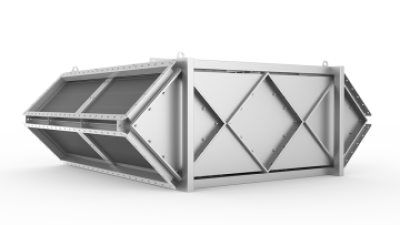
Industrial factories often release large amounts of hot air through ovens, drying systems, furnaces, painting lines, and process ventilation equipment. An air-to-air heat exchanger is a specially designed auxiliary device for industrial exhaust treatment, providing effective exhaust cooling while recovering usable heat energy. By transferring heat from outgoing air to incoming fresh air without directly mixing the two streams, it can support preheating, improve indoor climate control, and reduce the thermal load on heating equipment.
When selecting an industrial heat exchanger, engineers should evaluate exhaust temperature, airflow volume, humidity, dust concentration, and the presence of corrosive substances. The heat exchanger material and surface treatment should match the operating environment, while the design should allow convenient cleaning and maintenance. Pressure drop, heat recovery efficiency, installation space, and compatibility with existing fans and ducts are also important considerations. Suitable configurations may be applied to continuous production lines, centralized exhaust systems, workshops, and high-temperature process areas, helping factories make better use of waste heat while maintaining stable ventilation performance.
It combines living plants, growing media, and controlled airflow. Leaves absorb limited gases through tiny openings. Roots and microorganisms may process additional compounds. The potting medium also acts as a biological filter.
Gentle airflow moves room air across leaves and roots. Without airflow, purification is slow and difficult to measure. Keep air inlets clear. Leave space around the unit.
No. It cannot replace fresh-air ventilation or mechanical filtration. Dust, cooking fumes, humidity, and traffic pollution may overwhelm a small system. I once trusted attractive leaves too much. That judgment needed reconsideration.
Match the system to room size, airflow, plant area, and maintenance time. Check transparent performance testing, not only photographs. A verified clean-air delivery rating can help compare particle removal. Ratings alone are not enough.
Check the leaves and soil twice weekly. Remove fallen leaves quickly. Look for blocked vents, standing water, or unusual odors. Small details matter.
Avoid overwatering the growing medium. Keep water below the planter’s drainage line. Empty stagnant trays promptly. A musty smell signals a problem, not decoration.
Wash pre-filters gently every two to four weeks. Replace filters when airflow drops or dust returns. Clean removable parts according to the manual. Dry everything completely before reassembly.
Keep it away from curtains and heaters. Leave clear space around air inlets. Use extra caution near children, pets, and damp soil. I once missed dust behind an intake grille. Inspect patiently.
Choosing the best Plant Air Cleaner begins with understanding how plants, their leaves, roots, and growing medium may help support indoor air quality. While plants can contribute to reducing certain airborne pollutants, they should complement, not replace, ventilation and regular cleaning. Consider the room’s size, available natural light, humidity, and temperature before selecting suitable plants. Larger rooms may need several plants, while low-light spaces require varieties that can remain healthy with limited sunlight.
Air-cleaning capacity is only one consideration. Compare each plant’s growth rate, watering schedule, maintenance needs, and suitability for the people and animals in your home. Use clean containers with proper drainage and fresh, well-balanced soil to reduce mold and excess moisture. Place plants where air can circulate freely, but avoid blocking windows, heaters, or walkways. Regularly remove dust from leaves, check for pests, prevent overwatering, and handle soil hygienically. With thoughtful selection and consistent care, a Plant Air Cleaner can add natural beauty while supporting a fresher, more comfortable indoor environment.