Leave Your Message
-
 Online Message
-
 Phone:+8613927702137
-
 E-Mail: kleanesp@kleanland.com
-
 Whatsapp: +8613927702137
Online Message Phone:+8613927702137
E-Mail: kleanesp@kleanland.com Whatsapp: +8613927702137 A commercial kitchen hood isn't just a metal canopy hanging over the cooking line. It's what grabs heat, grease, smoke, and combustion byproducts before they drift through the rest of the workspace. In a busy restaurant, you notice pretty quickly when it's not doing its job. Steam fogs up the pass, Filters turn dark, and nearby walls get that sticky film when ventilation isn't keeping up. A good hood helps with cleaner air, safer cooking, and more consistent comfort for the staff.
Picking one? It takes more than measuring the width of the appliance. How you cook, what fuel you use, how intense the menu is, ceiling height, exhaust capacity—all of that matters. A griddle throwing off heavy grease needs different protection than a light-duty electric oven. A Commercial Coffee Roaster may need its own ventilation plan too, especially if roasting puts out smoke, heat, and fine particles. And local building, fire, and mechanical codes should shape the final design. Qualified folks can check airflow, duct routing, fire suppression, makeup air, and where everything discharges.
Small details matter. A lot.
In real projects, assumptions tend to cause trouble. A hood can look powerful and still perform badly if nearby doors create cross-drafts. Filters might be installed right but cleaned way too rarely. Even a well-chosen system may need tweaking once the kitchen actually starts running. This guide goes over common hood categories, practical selection factors, and warning signs that the design is off. It's not a replacement for an onsite evaluation. Conditions vary—and that uncertainty deserves honest attention.
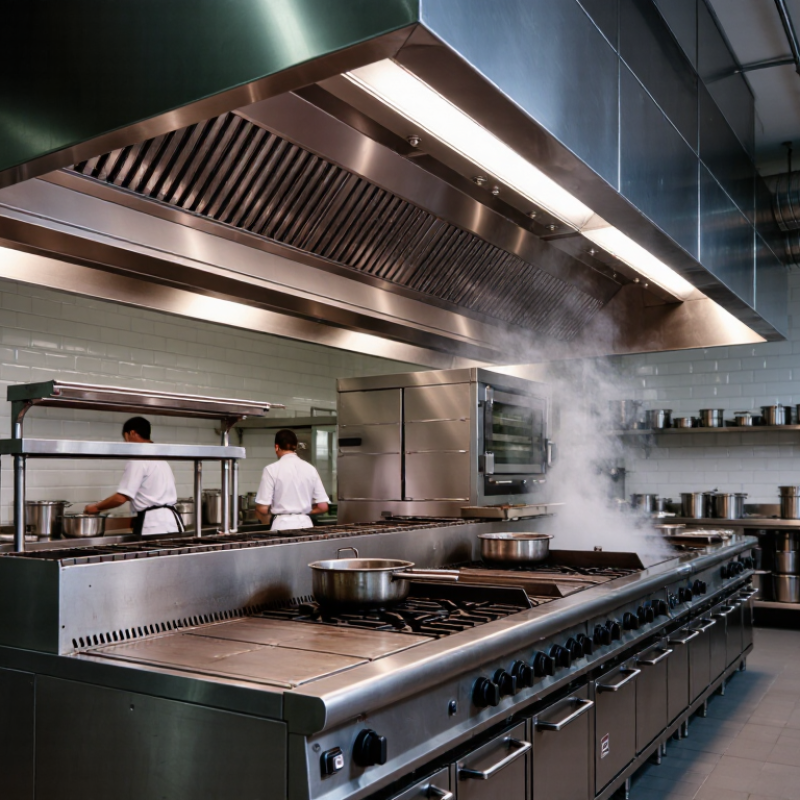
A commercial kitchen hood is a ventilated enclosure installed above cooking equipment. It captures heat, smoke, grease vapors, steam, and combustion by-products before they spread through the room. Air moves upward into the hood, through grease filters, and into a connected exhaust duct. An exhaust fan then discharges contaminated air outdoors. The hood also protects ceilings, walls, and equipment from greasy buildup.
In a busy kitchen, that difference becomes visible quickly. Stainless surfaces stay clearer. Staff can breathe more comfortably. A hood is not merely a metal canopy.
Its design depends on the cooking process below it. Light-duty electric cooking may need a different hood than open-flame ranges, fryers, charbroilers, or solid-fuel equipment.
Type I hoods are generally used where grease and smoke are produced. Type II hoods handle heat and moisture without grease-heavy exhaust. Some kitchens require a combination of both.
The correct choice depends on appliance output, hood dimensions, airflow, duct routing, replacement air, and local requirements. Bigger is not automatically better. Excessive airflow can waste energy and pull conditioned air from the dining area.
A practical evaluation should examine the whole system, not the hood alone. Check filter fit, fan access, duct cleanliness, fire-suppression coordination, and noise at the cooking line. Small gaps can let grease escape. Poor replacement-air design can make doors difficult to open.
These problems are easy to overlook during a quiet installation. They become obvious at Friday dinner. I would question any calculation based only on hood length. Cooking intensity matters more than appearance.
Qualified mechanical and fire-safety professionals should verify the design, installation, and inspections. Maintenance remains essential. Clean filters regularly, remove grease from accessible surfaces, and record service findings. No hood works perfectly forever.
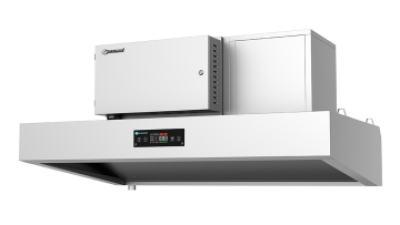
Commercial kitchens generate a complex mixture of smoke, grease, oil mist, and fine particulate matter that can quickly affect indoor air quality. A kitchen hood equipped with an electrostatic precipitator (ESP) provides an effective solution by capturing airborne contaminants before they spread through the cooking area or enter the exhaust system. With filtration efficiency of up to 98.5% for particles down to the submicron range, this technology helps create a cleaner, more comfortable environment for kitchen staff while reducing the visible smoke and greasy residue associated with intensive cooking.
A modular range hood design makes the system easier to configure for different kitchen sizes and ventilation requirements. Its stainless-steel ESP filtration cells offer durability and reliable performance, while an advanced high-voltage power supply supports consistent particle collection during continuous operation. For facilities seeking simpler maintenance, an optional automatic steam-wash system can help remove accumulated grease and contaminants, potentially allowing operation for up to one year without manual washing under suitable conditions. By combining high-efficiency filtration, adaptable construction, and automated cleaning, an ESP kitchen hood supports better air quality and more efficient commercial kitchen management.
Fryers, griddles, ranges, charbroilers, and woks can release grease, smoke, steam, and heat. A hood captures these emissions near the source. Odor control alone is not enough.
Wood or charcoal cooking can produce sparks, ash, and fine particles. These materials may enter the exhaust path. The design should address fire and particle risks.
Yes, when it is correctly sized and positioned above gas-fired equipment. Incomplete combustion may produce carbon monoxide, which has no dependable smell. Professional verification remains important.
Repeated steam can create condensation near electrical equipment. It may also leave floors dangerously slick. Pasta production and dishwashing can generate substantial moisture.
No. An air cleaner may reduce particles or odors, but it cannot replace code-compliant exhaust. Grease, smoke, and combustion gases need source capture. Clean filters cannot fix poor hood placement.
Measure the appliance line, ceiling height, and planned duct route. Check required clearances, duct construction, access panels, and fire protection. Small details matter.
It depends on the equipment, menu, heat level, and kitchen layout. A fryer or charbroiler usually needs more exhaust than a light electric range. Guessing is risky.
Without balanced replacement air, the hood may pull air through doors, bathrooms, or dining areas. This can create drafts and uncomfortable temperatures. A complete-looking plan may still miss this issue.
An undersized hood may leave smoke near the ceiling. An oversized hood can waste energy and make doors difficult to open. Neither result is ideal.
Inspect the system when cooking volume changes, equipment moves, or smoke lingers. Fan performance should be checked after installation. I would not assume a quiet kitchen is automatically safe.
A commercial kitchen hood is a ventilation system designed to capture heat, smoke, grease, steam, odors, and airborne particles produced during cooking. It works by drawing contaminated air away from cooking equipment, passing it through filters, and exhausting it outdoors or through an approved ventilation system. Hood ventilation is especially important above appliances that create heavy grease, open flames, high temperatures, smoke, or large amounts of steam, such as fryers, grills, ranges, ovens, and broilers.
The main hood types include systems for grease-producing cooking, lighter-duty ventilation, and specialized equipment that may require fire protection or additional air balancing. Choosing the right hood depends on the menu, cooking appliances, heat and grease output, kitchen layout, airflow needs, and available space. Installation should also account for clearance requirements, duct design, exhaust capacity, makeup air, access for cleaning, fire-suppression provisions, and local building and safety codes. A properly selected and installed commercial kitchen hood supports a cleaner, safer, and more efficient working environment.