In today’s tech world, the Electrostatic Cell definitely stands out as such an important part of the puzzle. I remember reading what Dr. Emily Carter from GreenTech Innovations once said – she mentioned that Electrostatic Cells totally change the game when it comes to Filtering and cleaning materials. Her insights really highlight just how crucial this tech is across all kinds of industries.
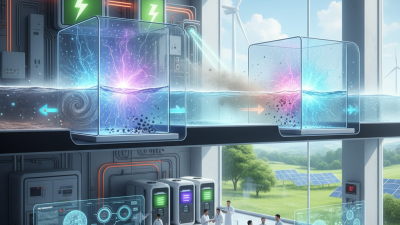
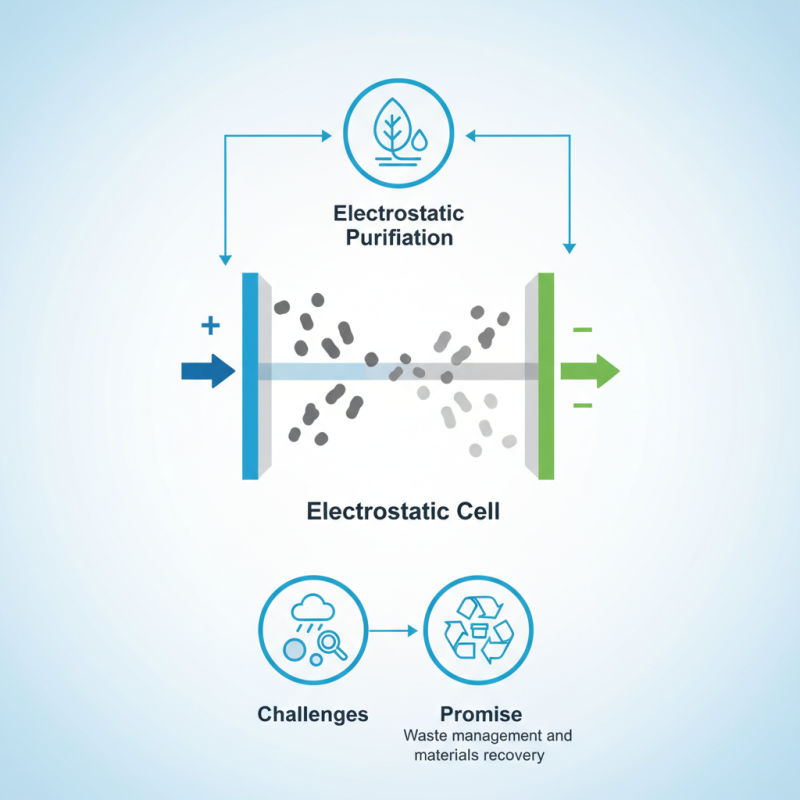
So, how does an Electrostatic Cell actually work? Well, it basically uses electrostatic charges to separate particles, which means it sorts them based on how electrically charged they are. Not only is this method pretty efficient, but it’s also kinda eco-friendly, which is a big deal these days. Especially as industries look for greener ways to do their thing, Electrostatic Purification has really started to stand out as a top choice.
That said, it’s not all smooth sailing. There are some hurdles, like how humidity or the size of particles can throw a wrench in the works. These little factors can make the technology perform less than perfectly, which means scientists are constantly working on tweaks and improvements. Still, the future of Electrostatic Cells looks pretty promising. They could be used for all sorts of stuff – from managing waste to recovering valuable materials. It’s an exciting field, for sure.
What is an Electrostatic Cell?
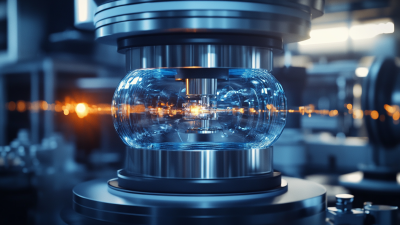
An electrostatic cell is a device designed to remove particles from the air using electric charges. It functions on the principle of ionization. This process involves charging particles in the air, allowing them to be attracted to oppositely charged plates. As air passes through, pollutants and dust stick to these plates, effectively cleaning the air.
In many applications, including Air Purifiers, electrostatic cells play a crucial role. For instance, anElectrostatic Smoke Purifier uses this technology to eliminate smoke particles from the air. It operates silently and efficiently. However, these systems may require regular maintenance. Dust can accumulate on the plates, reducing efficiency over time. Users often overlook this aspect, leading to suboptimal performance.
Challenges can arise as well. Improper setup may result in reduced airflow. Users sometimes find it difficult to place the unit for maximum effectiveness. Moreover, not all particles are captured, leaving some contaminants in the air. Conversations about improving these technologies should consider user experiences and needs, ensuring better designs in the future.
Key Components of an Electrostatic Cell
Electrostatic cells are fascinating devices that utilize electrostatic forces to function. At their core, they comprise key components that work together to convert energy. The primary elements include electrodes, an insulating medium, and a power source.
Electrodes are usually made of conductive materials. They play a crucial role in generating an electric field. The insulating medium, often a dielectric material, separates the electrodes. This separation facilitates the buildup of charge. It’s interesting how merely changing the position or material can alter the efficiency of the entire setup.
A power source is essential for any electrostatic cell. It provides the energy needed to create a potential difference between the electrodes. Sometimes, users overlook the importance of maintaining this power source. A weak source can lead to poor performance. The interaction between these components is not just about functionality. It’s also about balance and precision, where every detail counts.
Principle of Operation for Electrostatic Cells
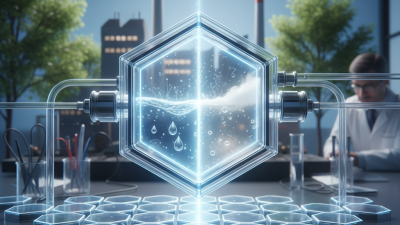
Electrostatic cells operate on the principles of electrostatics. They utilize electric charges to separate materials. When materials are exposed to an electric field, charged particles move. This process creates a separation of different components in mixtures. For instance, in mineral processing, electrostatic separation can enhance recovery rates by over 90% in some cases.
The principle behind electrostatic cells is quite intriguing. Charged particles experience forces depending on their properties. These particles can be attracted or repelled based on their charge. Current industry reports highlight a significant efficiency in using electrostatic techniques for recycling. Some sources state that up to 75% of electronic waste can be processed through this method. Despite these advancements, challenges remain. For example, not all materials respond well to electrostatic separation. This inconsistency warrants further exploration and fine-tuning of the process.
Understanding the limitations of electrostatic cells is equally important. Environmental factors can affect the operation. Humidity levels, for instance, can impact the performance and reliability of these systems. As industries adopt this technology, ongoing studies may reveal more about these variables. Hence, a deeper understanding of both the capabilities and limitations of electrostatic cells is essential as we advance in this field.
Types of Electrostatic Cells and Their Uses
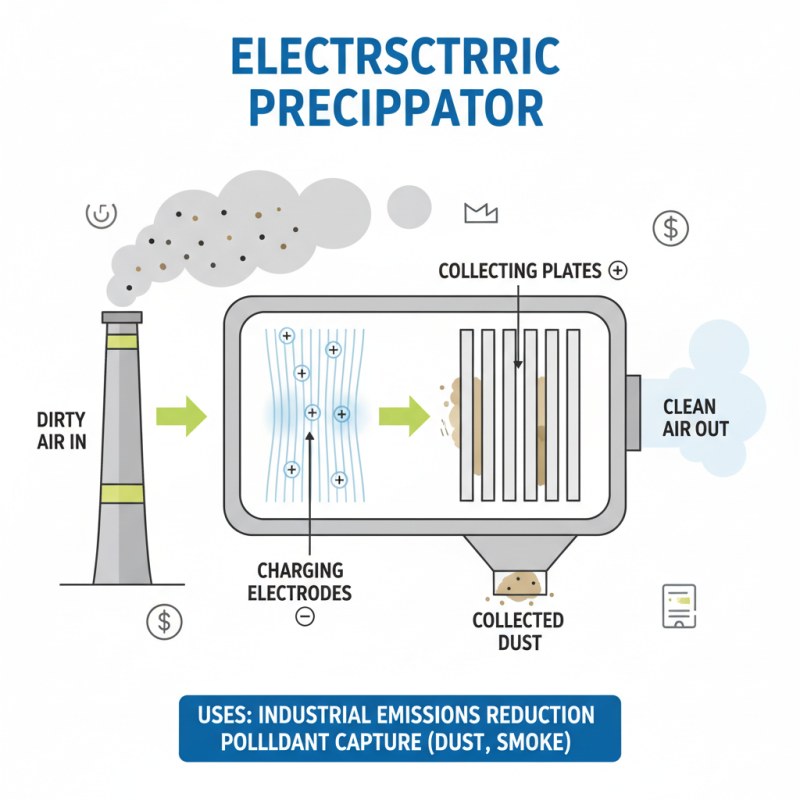
Electrostatic cells play an essential role in various applications, leveraging the principles of electrostatics. One notable type is the electrostatic precipitator. This device reduces pollutants from industrial emissions. It captures dust and smoke by charging particles. Then, it collects them on oppositely charged plates. The result is cleaner air discharged into the atmosphere.
Another common type is the ionization chamber. This device is widely used in smoke detectors. It works by sensing changes in ion flow due to smoke particles. Smoke disrupts the flow and triggers an alarm. Additionally, electrostatic nebulizers are crucial for medical applications. They create a fine mist of medication by using electric charge. This method enhances the delivery of aerosols to patients, making treatments more effective.
Yet, despite their benefits, challenges remain. The efficiency of electrostatic cells can vary greatly. They may not capture all particles effectively, especially in changing conditions. Maintenance is also essential; buildup on plates can reduce performance. Users must regularly check the systems for optimal function. The technology is powerful but requires attention to detail to maintain its effectiveness.
Applications of Electrostatic Cells in Industry
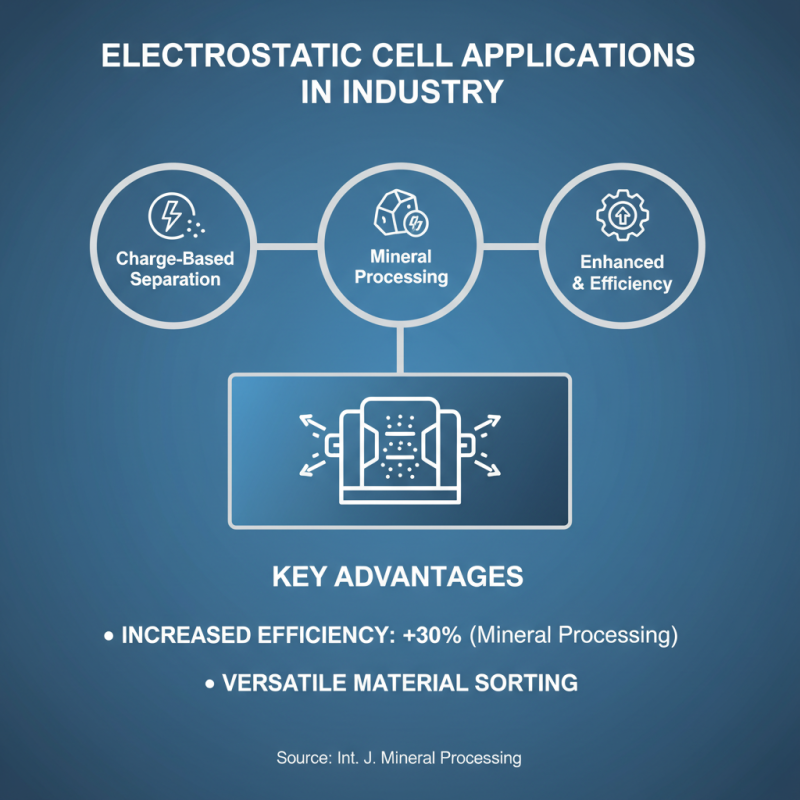
Electrostatic cells are pivotal in various industrial applications. Their ability to separate materials using electrical charges is invaluable. For instance, in the mineral processing industry, they are used to enhance the purity of products. According to a report by the International Journal of Mineral Processing, electrostatic separation has increased efficiency by 30% in specific cases.
In the recycling sector, electrostatic cells help recover valuable materials from waste. A study from the Journal of Cleaner Production found that the use of these cells can significantly boost recovery rates of metals, achieving up to 90% efficiency. However, the technology does not come without challenges. The variability in material size and moisture content can impact performance.
In the field of agriculture, electrostatic cells are emerging in pest control. They improve the application of pesticides by ensuring even coverage. Research from the Crop Protection Journal shows that this method reduces chemical usage by 20%. Despite these benefits, the initial setup cost and maintenance of electrostatic systems can hinder widespread adoption in smaller operations.
Advantages and Limitations of Electrostatic Cells
Electrostatic cells are fascinating devices that use electric fields to separate particles. They have notable advantages and limitations worth exploring.
One significant advantage is their high efficiency. According to a 2022 industry report, electrostatic cells can achieve over 90% separation accuracy in certain applications. This efficiency can drastically improve processes in fields like mineral processing or waste management. However, they are sensitive to particle size and can struggle with very fine materials. These limitations can compromise performance, leading to potential losses.
Tips: To enhance performance, ensure the particle size is consistent. Regular calibration of the power supply is also critical.
Another limitation is the dependency on humidity levels. High humidity can decrease the electrostatic charge, making particles harder to separate. This means that in humid environments, the effectiveness of an electrostatic cell may wane. Adapting the technology for different conditions can be a challenge for operators.
Tips: Monitor the environmental conditions closely. Consider adjustments if humidity levels fluctuate significantly.
Balancing the benefits with potential drawbacks is crucial for effective usage of electrostatic cells in industrial applications.
Future Developments in Electrostatic Cell Technology
Electrostatic cell technology is rapidly evolving. Researchers are exploring ways to enhance efficiency and sustainability. Recent studies indicate that electrostatic cells can achieve energy conversion efficiencies of over 80%. However, there's still significant room for improvement. Many cells operate below their theoretical limits. This gap presents both a challenge and an opportunity for innovation.
Future developments may focus on increasing material durability and capacity. Current materials often degrade over time, affecting performance. Reports suggest that new composites could increase lifespan by 25%. Additionally, the integration of advanced nanomaterials may enhance charge storage. These innovations could lead to smaller, more powerful cells.
Challenges remain. Scaling up these technologies for commercial use requires substantial investment. Moreover, the production processes can be complex. Balancing cost with performance is crucial for widespread adoption. Ongoing research aims to address these issues, paving the way for a more sustainable electrostatic cell industry. The future holds promise, yet caution is necessary as we proceed.
What is an Electrostatic Cell and How Does It Work? - Future Developments in Electrostatic Cell Technology
| Feature | Description | Current Applications | Future Developments |
| Operation Principle | Uses electrostatic forces to separate particles based on charge | Dust collection in industrial processes | Enhanced efficiency for renewable energy applications |
| Efficiency | High efficiency for fine particle separation | Air filtration systems | Smart electrostatic systems with adaptive control |
| Maintenance | Relatively low maintenance compared to mechanical systems | Used in automotive and aerospace industries | Integration with IoT for predictive maintenance |
| Cost | Initial investment can be high, but lower operational costs | Environmental cleanup applications | Development of cost-effective materials |
| Environmental Impact | Reduces emissions and waste in various applications | Air pollution control | Potential for carbon capture technologies |
Conclusion
An Electrostatic Cell is a device that utilizes the principles of electrostatics to separate particles based on their charge. It consists of key components such as electrodes, a power supply, and a medium for particle suspension. The principle of operation involves applying an electric field to induce charge on the particles, allowing them to migrate towards the electrodes, where they can be collected or separated.
Electrostatic Cells come in various types, each designed for specific applications, including air pollution control, mineral processing, and the recycling of materials. While they offer advantages like high efficiency and low operational costs, they also have limitations, such as sensitivity to particle size and moisture content. As technology progresses, future developments in electrostatic cell technology are anticipated to enhance their effectiveness and expand their industrial applications.

 Online Message
 Phone:+8613927702137
 E-Mail: kleanesp@kleanland.com
 Whatsapp: +8613927702137