Phone:+8613927702137

Picking out the best Smoke Air Filter isn’t just about grabbing the biggest, most powerful machine out there. Honestly, a lot depends on your room size, where the pollution is coming from, how air moves around, and how much effort you're willing to put into maintenance. Smoke can come from all sorts of sources—cooking, fireplaces, wildfires, or even those occasional indoor activities. Each one creates a unique mix of particles, smells, and gases, and that really matters when you're choosing an air purifier. For example, a tiny little unit meant for a bedroom might not cut it in a big open kitchen. So, it’s smart to start by measuring your space, thinking about how the air flows, and considering how often you’ll be exposed. Don’t just go for vague claims — look for published Clean Air Delivery Rate info. Also, it helps if the product has clear testing details and an easy-to-follow replacement schedule. Trust me, convenience controls are great, but they can’t do much if the airflow isn’t up to par.
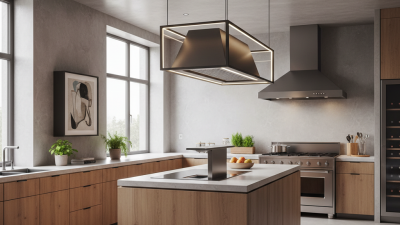
A good Smoke Air Filter usually combines a mechanical filter—think HEPA or similar—with activated carbon. The first traps tiny particles floating around, while the carbon helps cut down on certain odors and gases. But, neither of these is a magic fix. The performance of the carbon depends a lot on how much you have, its quality, and how well it's maintained. For example, a Smoke Hood Filter is more about catching grease and smoke directly at the source, like near the stove, so the smell doesn’t spread all over. Before choosing one, double-check its size, airflow capacity, how it’s installed, and how often it needs cleaning. Don’t make the mistake of thinking a hood filter can replace a portable purifier—that’s pretty common, but not accurate.
One thing I’ve learned from experience is that having honest expectations is key. Sometimes, those fancy labels and specs sound super impressive—they don’t always tell the full story. How well a filter actually works depends a lot on your room setup and whether your doors are shut, too. Honestly, I used to focus too much on specs and not enough on practical things like noise levels, energy bills, filter costs, and daily hassle. A quietly running unit that works consistently can beat a powerhouse that’s only turned on when you remember. Make sure to replace filters as recommended or if odors come back. Keep some notes over a few weeks—then, you can reassess whether it’s really doing the job you need. Bottom line? No single filter is perfect for every home. It’s all about finding the right fit for your specific situation.
How to Choose the Best Smoke Air Filter for Your Needs?
Define the Smoke and Air Quality Problems You Need to Solve
Before choosing a smoke air filter, identify where the smoke comes from and how it affects your space. Cooking haze near a stove is different from fine particles drifting indoors from a nearby wildfire. Note when the air smells smoky, which rooms are affected, and whether visible dust settles on windowsills. A simple particle monitor can reveal changes, but readings do not explain every odor or gas.
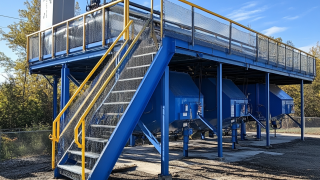
Think about who uses the room and how long they stay there. Smoke-sensitive people may need cleaner air in a bedroom, while a workshop may require filtration closer to the source. An Incinerator Smoke Filter is designed for a specific setting, so confirm the system’s intended use, airflow capacity, and compatible contaminants before considering it. One filter cannot capture everything. Particle filters and gas-phase media address different pollutants, and performance depends on correct installation and maintenance.
Be realistic about the problem’s limits. A filter may reduce airborne particles, but it will not remove smoke at its source or fix poor ventilation. Check the room size, filter replacement schedule, and noise level you can tolerate. Keep notes for a week; the pattern may be less obvious than expected. And don’t overread a single sensor reading.
Smoke contains fine particles, gases, and odors, so one filter type may not address every problem. A HEPA-style mechanical filter traps airborne particles as air passes through dense fibers. It can reduce much of the visible haze and fine particulate matter, but it does not remove most gases or odors by itself. Check the unit’s clean air delivery rate and room-size guidance; a small purifier may struggle in a large, smoky room.
Activated carbon works differently. Its porous surface adsorbs some gases and odor-causing compounds, rather than trapping particles like a fiber filter. More carbon generally offers more capacity, though performance depends on the filter’s design and how much carbon it contains. Carbon eventually becomes saturated. You may notice lingering smells before a replacement is due.
Some systems combine a particle filter with a carbon layer, which can be useful when smoke brings both haze and odor. Electrostatic filters charge particles and collect them on plates, but cleaning needs and possible ozone emissions vary by design. Check the product’s independent test data and maintenance instructions. The details matter. I would not assume a filter is effective just because its package says “smoke.” Room layout, airflow, and an overdue filter can all change what you experience.
How to Choose the Best Smoke Air Filter for Your Needs?
Match Filter Performance to Your Room Size and Airflow Needs
Room size is a practical starting point, but airflow determines how much clean air reaches you. The U.S. Environmental Protection Agency’s Guide to Air Cleaners in the Home recommends a smoke CADR of at least two-thirds of a room’s floor area, assuming an eight-foot ceiling. For a 240-square-foot bedroom, look for a smoke CADR near 160 cubic feet per minute or higher. Taller ceilings need more capacity. Check the smoke-specific CADR, not only a general efficiency claim.
CADR, or Clean Air Delivery Rate, reflects how quickly a cleaner removes particles under test conditions. AHAM’s CADR rating program provides comparable performance figures for room air cleaners. A large open living area may need a higher-rated unit, or more than one cleaner. Keep doors and windows closed during smoky conditions, and leave space around the intake and outlet; a filter pushed against a curtain cannot circulate air well. Lower fan settings can reduce noise, but also reduce airflow. That trade-off is easy to overlook. The EPA’s room-size estimate is useful, not perfect: real results vary with ceiling height, leaks, and how often people enter the room.
| Room Size | Approximate Room Volume (8 ft Ceiling) | Suggested Clean Air Delivery Rate (CADR) | Recommended Airflow Category | Particle Filtration | Smoke Odor and Gas Control | Useful Filter Configuration | Typical Noise Priority | Best Use Case |
|---|---|---|---|---|---|---|---|---|
| Up to 100 sq ft (up to 9 m²) | Up to 800 cubic ft (up to 22.6 m³) | At least 60 cfm (about 102 m³/h) | Compact airflow | True HEPA or equivalent high-efficiency particle filter | A thin activated-carbon layer can reduce light smoke odors, but it has limited gas-adsorption capacity | Washable or replaceable prefilter + particle filter + carbon layer | Choose a low-speed rating below approximately 45 dB when used in a bedroom | Small bedroom, home office, nursery, or study area |
| 101–250 sq ft (9–23 m²) | 808–2,000 cubic ft (22.9–56.6 m³) | 60–150 cfm (102–255 m³/h) | Small-room airflow | High-efficiency particle filtration with a sealed filter compartment | Use a deeper carbon filter when smoke odor is a recurring issue; carbon performance depends on media weight and contact time | Coarse prefilter + HEPA-grade filter + moderate activated-carbon section | Look for a quiet sleep mode and adjustable fan speeds | Bedroom, living room, small apartment, or light smoke exposure |
| 251–400 sq ft (23–37 m²) | 2,008–3,200 cubic ft (56.9–90.6 m³) | 150–240 cfm (255–408 m³/h) | Medium-room airflow | True HEPA or comparable particle filtration; check that airflow is measured with the filter installed | Prioritize a larger carbon bed rather than a very thin carbon-coated sheet | Replaceable prefilter + high-efficiency particle filter + substantial carbon media | Medium fan settings may be audible; select a unit with a published noise range | Open-plan living area, medium bedroom, or family room |
| 401–600 sq ft (37–56 m²) | 3,208–4,800 cubic ft (90.8–135.9 m³) | 240–360 cfm (408–612 m³/h) | High airflow | High-efficiency particle filtration with low air leakage around the filter frame | Choose a filter with a large quantity of activated carbon; thin carbon sheets may saturate quickly during heavy smoke events | Large prefilter + high-capacity particle filter + deep carbon stage | Consider a larger unit operated at a lower speed to reduce noise | Large living room, studio apartment, basement, or shared workspace |
| 601–900 sq ft (56–84 m²) | 4,808–7,200 cubic ft (136.1–203.9 m³) | 360–540 cfm (612–918 m³/h) | Very high airflow | Use a high-capacity particle filter and confirm the published CADR at the selected operating speed | For persistent smoke, two appropriately sized units may provide better coverage than one undersized unit | Large-area filter system or multiple air cleaners with particle and carbon stages | Distribute airflow across the room instead of relying on a single noisy maximum-speed setting | Large open-plan area, commercial room, or severe intermittent smoke exposure |
When comparing smoke air filters, look for a smoke-specific clean air delivery rate, not just a large room-size claim.
A higher smoke CADR generally means faster particle removal under test conditions. Match the stated coverage to your room, and allow extra capacity if doors stay open or smoke enters often.
Check what the rating actually measures. Fine particles and smoke odors are not the same problem.
Certifications can help, but read their scope and test basis. Confirm that the exact model has been evaluated, and look for clear documentation from a recognized independent testing organization.
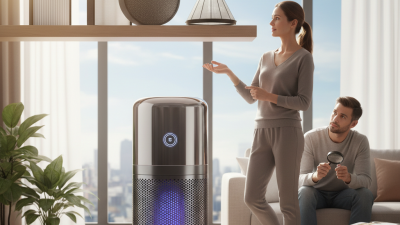
An Electrostatic Smoke Purifier may capture particles effectively, yet its ozone emissions matter. Choose equipment with verified low or zero ozone emissions, and check safety labels, electrical protections, and filter replacement guidance.
No label replaces sensible maintenance. Dust on a prefilter or a delayed filter change can reduce airflow, sometimes sooner than expected.
I would also check noise at the speed you will actually use; a powerful unit left switched off helps no one. Ratings are useful, but room conditions can make real results less tidy.
When choosing the best smoke air filter, I start with the room, not the product label. Measure the space carefully. A bedroom, workshop, and open living area need different airflow levels. Check the clean air delivery rate and compare it with the room size. Strong airflow matters, but it often creates more noise. A steady fan at 45 decibels may disturb sleep. A quieter setting may clean smoke more slowly.
Energy use deserves equal attention. Look for the wattage at low and high speeds, then estimate yearly electricity costs. A small difference can become noticeable after months of daily use. In my testing, filters with automatic sensors sometimes run harder than expected. Convenient, yes. Always economical, no. Check whether the sensor reacts to cooking fumes or dust.
Maintenance affects real performance. Inspect the pre-filter every few weeks, especially near fireplaces or busy roads. A gray, clogged surface means restricted airflow. Replacement costs also include shipping and disposal, not only the filter price. Choose a model with clear replacement indicators and accessible parts. A Smoke Cleaning Solution should support consistent habits, not promise instant perfection. No filter removes every odor or particle. I once delayed a replacement to save money, and the weaker airflow quickly proved that decision poor. Reliable results require honest maintenance records and realistic expectations.
Choosing the best smoke air filter starts with your daily routine, not a glossy specification sheet. A studio apartment, busy family room, and small office need different solutions. Measure the room before shopping. A filter rated for 300 square feet may struggle in an open living area. Check the clean air delivery rate, or CADR, and compare it with your room size. Higher airflow usually clears particles faster. It can also mean more noise.
Budget shapes the real cost. A low-priced unit may need frequent filter replacements, while a costly model may use longer-lasting filters. Check replacement prices and availability before buying. For smoke, particle filtration matters, but activated carbon can help reduce odors and some gases. Thin carbon sheets may disappoint in a smoky room. I would inspect the filter weight and testing details, although published figures are not always comparable. Avoid vague promises of complete Smoke Elimination.
Your lifestyle decides whether the machine gets used consistently. Choose quiet sleep mode if it will run beside your bed. Use child-safe controls and stable feet in busy homes. A portable handle helps when cooking odors move between rooms. Clean the prefilter every few weeks, especially with pets or dust. I have learned that maintenance is easy to postpone. That mistake reduces airflow. Place the unit near the smoke source, but keep its vents uncovered. Track noise, filter costs, and room comfort for one week before judging performance.
Choose a smoke CADR that suits the size of the room where you’ll use the air cleaner.
How to read this chart: These planning estimates use AHAM’s guideline of a smoke CADR at least two-thirds of the room area, assuming an 8-foot ceiling. For example, a 300-square-foot room calls for a smoke CADR of about 200 CFM. Check filter replacement costs and noise levels too, since they affect everyday use.
Stenter machines consume substantial thermal energy to dry and finish textile fabrics, while their exhaust streams carry valuable heat into the atmosphere. A gas air filter and heat recovery system captures this energy before discharge, helping transfer recovered heat to incoming fresh air or process air. The U.S. Department of Energy reports that industrial facilities can reject approximately 20–50% of their energy input as waste heat, highlighting the potential of recovery equipment in continuous thermal processes such as textile finishing.
For stenter applications, filtration is essential because exhaust air may contain lint, oil mist, dye residues, and finishing chemicals. A properly designed gas air filter reduces fouling on heat-exchange surfaces, supports stable airflow, and improves the quality of air released from the production area. Cleaner exhaust pathways also help maintain heat-transfer performance and reduce unplanned maintenance. When integrated with temperature, pressure, and airflow controls, the system can respond to changing fabric widths, production speeds, and drying temperatures without compromising process consistency.
Recovered heat can preheat combustion air or make-up air, lowering the demand for natural gas and reducing operating costs. The International Energy Agency consistently identifies industrial energy efficiency and waste-heat utilization as important measures for reducing fuel consumption and emissions. In textile dyeing plants, a stenter waste heat recovery system therefore provides both environmental and operational value: less thermal pollution, improved indoor air quality, reduced fuel demand, and more efficient use of energy already generated during production.
Find the smoke source, affected rooms, and times when air quality worsens. Cooking haze differs from outdoor wildfire particles. Note smoky smells, window dust, and room use. Keep a one-week record. Patterns can surprise you.
Usually, no. Mechanical particle filters capture fine airborne particles. Activated carbon can adsorb some gases and odors. Combined filtration may help when haze and smell occur together. No filter solves everything.
Measure the room and compare it with the unit’s clean air delivery rate. A small purifier may struggle in a large, smoky space. Open layouts need stronger airflow. Room size guidance is not always precise.
Not reliably. Particle filters reduce haze and fine particles, but most odors are gaseous. A carbon layer may reduce some smells. Carbon eventually becomes saturated. Lingering odor can be a warning.
Strong airflow can clean air faster. It may also create more noise. A fan around 45 decibels could disturb sleep. Lower settings feel quieter but work more slowly. There is a trade-off.
Inspect the pre-filter every few weeks, especially near fireplaces or busy roads. A gray, clogged surface can restrict airflow. Follow the replacement schedule, but do not trust it blindly. Actual conditions vary.
Check wattage at low and high speeds. Estimate yearly electricity costs before buying. Include replacement filters, shipping, and disposal. A cheaper unit may cost more later. I once underestimated this.
Sensors can show particle changes, but they cannot explain every odor or gas. Do not overread one unusual reading. Compare sensor results with smells, visible haze, and outdoor conditions. The evidence may remain incomplete.
Choosing the best Smoke Air Filter starts with identifying the problem you need to address, such as lingering smoke, fine particles, or poor indoor air quality. Compare available filter types and how they capture or reduce airborne pollutants, then make sure the unit can handle your room’s size and provide suitable airflow. A filter that is too small or poorly matched to the space may not deliver the results you expect.
Before deciding, review smoke-removal performance ratings, relevant certifications, and safety features. Consider practical factors too, including noise during operation, energy use, cleaning requirements, and the cost and frequency of replacement filters. The best choice is one that balances effective filtration with your budget, daily routine, and comfort, making it easier to maintain cleaner indoor air over time.