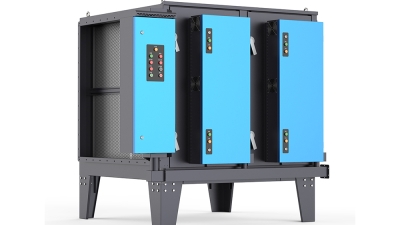
Hey there! You know, as more folks realize how important good indoor air quality is, a lot of businesses are on the lookout for better ways to handle airborne pollutants. Yeah, traditional particle filters have been the go-to for keeping the Air Cleaner, but lately, we're seeing some pretty exciting new options popping up and gaining ground in the industry. Did you hear that, according to the latest report from theWorld Health Organization, nearly 7 million peoplearound the world die each year because of poor air quality? That really underscores just how urgent it is to find effective Air Purification solutions. One company making waves isFoshan Kelan Environmental Protection Co., LTD, operating under their brand Kleanland. They’ve become a real leader in the space, especially in things like restaurants, cafes, and hotels, thanks to their advanced electrostatic air purification tech.

In this blog, I’ll be diving into some of these innovative alternatives to your old-school particle filters and showing how Kleanland is truly leading the way toward better air quality for a wide range of places.
Understanding Particle Filters: A Comprehensive Overview of Air Quality Solutions
Particle filters play a pretty crucial role in keeping the air inside our homes clean by catching and removing harmful particles. You’ve probably heard of different kinds—like HEPA filters and electrostatic precipitators—and each one has its own strengths and uses. For instance, HEPA filters are known for their impressive ability to trap 99.97% of tiny particles, even those as small as 0.3 microns. That makes them perfect if you're worried about allergens, dust, or even some germs floating around.
But, here's the thing—sticking to just traditional particle filters might not be enough sometimes. There are other options out there that can really boost air quality in unique ways. Activated carbon filters are great at absorbing smells and volatile organic compounds (VOCs), while UV light systems can kill bacteria and viruses on contact. Combining these different technologies can give you a much more comprehensive approach to air purification, helping to make your space healthier and more comfortable. Getting to know these options can help you pick the right setup based on your specific air quality concerns, instead of just sticking to one method all the time.
Evaluating the Limitations of Traditional Particle Filters in Environmental Monitoring
You know, traditional particle filters have been the go-to tools for keeping an eye on air quality for ages. But let’s be honest — they’re not perfect. They have some pretty clear limitations that can really hold back how well they capture all the different particles and pollutants out there. One big issue is that they tend to focus on certain particle sizes, so those super tiny particles—probably the nastiest for our health—often slip right past without detection. And that means we might not get the full picture of what’s really going on in the air around us, especially in busy cities where pollution can change from moment to moment.
Plus, these traditional filters can get clogged up pretty easily. That means we have to swap them out more often, which racks up costs and also creates a lot of waste—something the environment definitely doesn’t need. It’s clear we need better solutions that can detect a wider range of particles and do it in real time. Luckily, new tech like optical sensors and smarter data analysis tools are showing a lot of promise here. By bringing these innovations into the mix, we can get a much clearer, more accurate picture of air quality. That’s huge because it could lead to healthier environments and informed communities that actually know what’s going on with the air they breathe every day.
Emerging Technologies: Next-Gen Alternatives for Effective Air Quality Management
You know, emerging tech in air quality management is really changing how we keep our indoor and outdoor spaces healthy. I mean, for ages, traditional particle filters have been the go-to for air purification — you’ve probably seen them everywhere. But now, there are some pretty exciting new options popping up, like photoelectrochemical (PEC) systems and bio-inspired filters. I read in the 2022 Global Clean Air Market Report that the demand for fresh air solutions is expected to jump around 15% every year. One cool thing about PEC tech is that it can transform pollutants into harmless stuff just by using light — so it’s a more eco-friendly way to clean the air, which is pretty awesome.

And it doesn’t stop there! Advances in AI and machine learning are really shaking things up too. These smart systems can analyze real-time data from all sorts of sources, helping us predict air quality issues before they even happen and tweak the filtration as needed. A study from the Air Quality and Climate Research Institute in 2023 showed that AI-powered air management systems could cut particulate matter in cities by about 30%. That’s a pretty big deal because it highlights how these next-gen solutions aren’t just about making the air cleaner — they’re also about creating smarter, more responsive spaces that kind of 'live' and 'breathe' with us.
Data-Driven Insights: The Impact of Airborne Particulate Matter on Public Health
Airborne particles in the air—especially things like PM2.5 and PM10—are a real health concern for millions of people around the world. The World Health Organization (WHO) warns that breathing in these tiny particles can lead to serious health issues, like lung problems, heart disease, and even early death. In fact, they estimate that around 4.2 million lives are cut short each year because of air pollution, mainly caused by these microscopic particles. That really drives home the point that we need smarter, more effective ways to handle air quality and cut down our exposure to these harmful pollutants.

Lately, new research has shown just how crucial good monitoring is. For example, the EPA reports that even a small increase of 1 microgram per cubic meter in PM2.5 levels can bump up the risk of heart problems by about 0.5%. It’s pretty clear that traditional filters might not be enough to deal with this threat. That’s why people are turning to newer, more advanced options—like electrostatic and photocatalytic filters—that can trap even the tiniest particles and break down harmful chemicals. Basically, using smarter technologies and relying on solid data can make a big difference in public health—helping us breathe cleaner air and reduce these health risks.
Sustainable Practices: Integrating Innovative Filters into Urban Infrastructure
As cities keep spreading out, it’s becoming more and more important to bring in smart air filtration systems into urban infrastructure. You know, with people really caring about cleaner air, the indoor air quality market’s projected to hit around $270 billion by 2033—pretty incredible, right? That kind of growth really shows how we need to focus on sustainable practices that not only make city living better but also help protect the environment.
Tech like electrostatic air purifiers is actually a pretty exciting way to tackle urban air pollution head-on. Companies like Kleanland are really pushing the envelope, using the latest tech to deliver top-notch air purification solutions suitable for all sorts of places, from restaurants to hotels. And the best part? They’re putting a big emphasis on eco-friendly methods, so they’re not just making indoor air healthier—they’re also doing their part for sustainability. Introducing these advanced filter systems into city infrastructure isn’t just about ticking boxes on regulations anymore; it’s about genuinely improving public health, especially where people live and work in dense neighborhoods.
Innovative Alternatives to the Best Particle Filter for Urban Air Quality
The Role of Regulatory Standards in Shaping Air Quality Filter Technologies
Nowadays, managing air quality has become a lot more influenced by strict regulations that set the standards for how effective air purification technologies should be. These rules really push companies to get creative, leading to new and better solutions beyond just traditional particle filters. Take Foshan Kelan Environmental Protection Co., Ltd, for example — they work under the brand Kleanland and are a pretty good illustration of this shift. They’re using advanced tech like electrostatic air purification to stay ahead. By sticking to these tough regulations, Kleanland doesn’t just make sure their products are safe; they also help improve the air in all sorts of places — restaurants, hotels, cafes, you name it.
As the standards around air quality keep evolving, it’s inspiring businesses to look for smarter, more innovative ways to clean the air. Kleanland, for instance, has really embraced these changes by focusing on how effective their electrostatic systems are at capturing airborne pollutants — which is a game-changer compared to older methods. As everyone moves toward greener, more sustainable solutions, Kleanland stays on top by not only meeting regulatory benchmarks but also by paying attention to what their diverse customers actually need when it comes to clean air.
Innovative Alternatives to the Best Particle Filter for Your Air Quality Needs
| Filter Type | Efficiency (%) | Lifespan (months) | Maintenance Requirement | Regulatory Compliance |
| HEPA Filter | 99.97 | 12 | Regular Replacement | Follows HEPA Standards |
| Activated Carbon Filter | 90 | 6 | Occasional Replacement | EPA Compliant |
| UV Air Purifier | 99 | 9 | Bulb Replacement | Intertek Certified |
| Electrostatic Precipitator | 95 | 24 | Frequent Cleaning | Meets ANSI Standards |
Maximizing Efficiency in Oil & Gas: The Impact of 95% Efficiency Standard/Uniform-Stage ESP Filters on Production Output
In the oil and gas industry, maximizing efficiency is paramount to enhancing production output while minimizing environmental impact. The implementation of 95% efficiency standard uniform-stage ESP filters is a game-changer in this pursuit. These advanced filters not only provide a safe and stable solution for processing but also contribute significantly to energy conservation, boasting a remarkable 50% reduction in energy consumption. According to a recent industry report, adopting energy-efficient technologies has been linked to up to a 20% increase in overall operational performance, further emphasizing the importance of innovations like the uniform-stage ESP filters.
Moreover, these filters improve the treatment area by 16% and reduce power consumption by 30-40%, facilitating more effective processing of oil smoke and fine particulates. This efficiency boost is critical, especially as regulatory pressures increase regarding emissions standards. Studies indicate that companies adopting similar technologies have seen compliance rates rise, leading to fewer environmental violations and associated fines. With the focus on sustainability and clean energy practices, integrating advanced filtering systems like the 95% efficiency standard uniform-stage ESP filters positions oil and gas companies to not only meet compliance but also enhance their production capabilities, driving long-term growth and operational excellence.
FAQS
: Emerging technologies include photoelectrochemical (PEC) systems, bio-inspired filtration, electrostatic filters, and photocatalytic filters that are transforming traditional air purification methods.
AI systems analyze real-time data to predict air quality changes and optimize filtration processes, potentially reducing particulate matter concentrations by up to 30% in urban areas.
Airborne particulate matter, especially PM2.5 and PM10, is linked to severe health issues such as respiratory diseases, cardiovascular problems, and contributes to approximately 4.2 million premature deaths annually.
Effective monitoring is crucial because even a slight increase in PM2.5 levels can significantly escalate the risk of cardiovascular events, highlighting the need for advanced filtration solutions.
The indoor air quality market is expected to grow significantly, reaching $270.3 billion by 2033, driven by the rising demand for efficient purification solutions in urban areas.
These technologies, such as electrostatic air purifiers, can effectively address urban air pollution challenges while promoting public health and ensuring compliance with regulatory standards.
Sustainable practices in the development and implementation of air filtration systems contribute to better indoor air quality and align with global environmental preservation efforts.
PEC systems can convert pollutants into harmless substances using light, offering a more sustainable approach to air purification.
Traditional filters may not effectively address health threats related to airborne particulate matter, prompting a shift toward advanced solutions capable of capturing smaller particles and decomposing harmful pollutants.
Companies like Kleanland are employing cutting-edge technology to provide superior air purification solutions for various environments, contributing to healthier indoor air quality while promoting sustainability.

 Online Message
 Phone:+8613927702137
 E-Mail: kleanesp@kleanland.com
 Whatsapp: +8613927702137