Phone:+8613927702137

Smoke Filter tech is turning into a real practical priority for factories, commercial kitchens, labs, and building operators. It grabs smoke particles before they can drift into ventilation systems or places people actually occupy. But performance isn't just about what's on the product label. Filter media, airflow resistance, pressure drop, maintenance access, and tested efficiency—all of that matters.
Back in 2022, the World Health Organization reported that 99% of the global population lived in areas that exceeded its air-quality guideline levels. The U.S. EPA also points out that indoor pollutant concentrations can be two to five times higher than outdoor levels. That helps explain why demand for reliable filtration equipment keeps growing. MarketsandMarkets has called air filtration a continuing growth sector, pushed by stricter indoor-air expectations and industrial emission controls. Still, market forecasts alone don't prove a product is any good.
This guide looks at ten global Smoke Filter suppliers: 3M, Camfil, Donaldson Company, Mann+Hummel, Filtration Group, Parker Hannifin, AAF International, Koch Filter, Freudenberg Filtration Technologies, and Hengst Filtration. Their product ranges are pretty different. Some lean into industrial Dust Collection. Others focus on kitchen exhaust or cleanroom systems. ASmoke Hood Filter might work for a compact cooking line, while a high-temperature industrial unit needs different materials and certification.
The details really do matter.
When choosing, think about test standards, replacement intervals, local service, and total operating cost. Supplier websites can sound very convincing, but independent validation is still a must. So this ranking is useful, not absolute. Real installations may turn out differently. That limitation is worth paying attention to. Reliable buyers should compare technical datasheets, lab evidence, and field experience before making a final call.
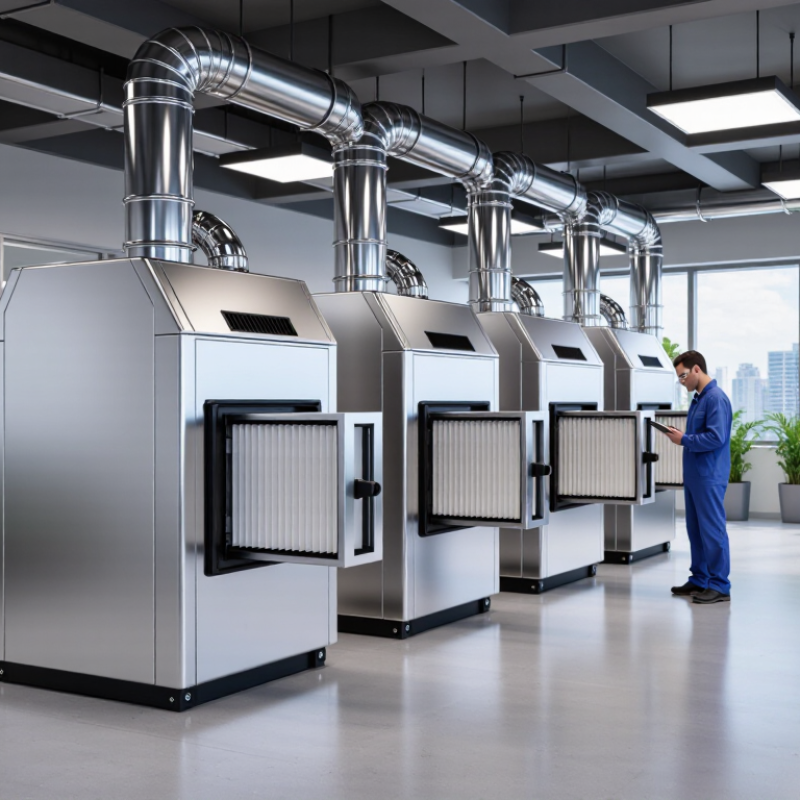
Smoke filters are engineered barriers that remove airborne particles from combustion, manufacturing, and emergency ventilation streams. They commonly use fibrous media, fabric bags, electrostatic fields, or activated carbon. Particle filters capture soot and ash; carbon media can adsorb selected gases and odors. These functions are related, but not interchangeable.
The World Health Organization’s 2021 Air Quality Guidelines identify fine particulate matter as a major health concern. WHO also estimates that combined ambient and household air pollution contributes to nearly seven million premature deaths each year. This makes filter selection a control decision, not merely a purchasing task.
The U.S. Environmental Protection Agency’s Air Pollution Control Cost Manual reports that properly designed fabric filters can achieve particulate collection efficiencies above99 percent.
Real performance still depends on airflow, temperature, moisture, dust loading, and maintenance.
A practical supplier review should examine tested efficiency, pressure drop, replacement intervals, fire resistance, and disposal procedures. Ask for laboratory data and field results. Numbers can mislead. A filter rated at 99 percent under controlled conditions may perform differently in a hot, humid exhaust system.
The EPA’s guidance on particulate controls supports regular inspection and performance monitoring. In my experience, neglected seals often undermine expensive filter media. That detail is easy to miss. Supplier claims should therefore be checked against measured outlet concentrations, energy use, and documented operating conditions.
Modern smoke filtration depends on matching pollutants to the right control stage. A typical Incinerator Smoke Filter system may combine a cyclone, fabric baghouse, wet scrubber, and activated-carbon injection. Cyclones remove heavier particles first. Bag filters then capture fine dust through a thin dust cake on heat-resistant fabric. The European Commission’s 2019 Waste Incineration BREF reports dust emission levels of 2–5 mg/Nm³ as daily BAT-associated values. That figure is useful, but field performance can fall when bags age or airflow changes.
Electrostatic precipitators charge particles before collecting them on metal plates. They work well with large gas volumes, yet sticky dust can reduce efficiency. Wet scrubbers absorb acid gases, while activated carbon targets mercury and persistent organic compounds. The U.S. EPA’s AP-42 guidance shows that fabric filtration can achieve very high particulate removal, often above 99 percent, when properly designed and maintained. Sensors now track pressure drop, temperature, opacity, and mercury trends in real time. Small details matter. A leaking gasket can undermine an expensive system. The World Health Organization reported in 2022 that 99 percent of people lived with air pollution above its revised guideline levels. That statistic strengthens the case for verified monitoring, not optimistic supplier claims. Some designs still overuse energy, and that weakness deserves more attention.
Evaluating global smoke filter suppliers requires more than comparing catalog prices. Start with documented filtration performance, tested under conditions similar to your facility. A supplier should state particle size ranges, airflow rates, pressure drop, and expected service life. Vague claims create expensive surprises. Ask for independent laboratory reports and traceable test methods.
Manufacturing experience matters when equipment operates near heat, oil mist, or continuous production lines. Review material quality, weld consistency, sealing design, and replacement procedures. For an Electrostatic Smoke Purifier, inspect electrode construction, collection efficiency, electrical safeguards, and cleaning access. Request sample maintenance records from comparable installations. Real operating evidence is stronger than polished brochures.
Supplier reliability also depends on technical support across regions. Check response times, spare-part availability, installation guidance, and training options. Clear warranty terms should cover measurable performance, not only defective parts. Certifications should match the destination market and the equipment’s intended use. I would also examine energy consumption, noise levels, and the supplier’s process for handling failed units. These details are often overlooked. A weakness remains possible: laboratory results may not reflect changing factory conditions. Independent site testing can expose that gap before a large purchase. Keep written evaluation records, including rejected options and the reasons behind each decision.
Top 10 Smoke Filter Suppliers Worldwide
The worldwide smoke filter market is shaped by regional industries, regulations, and maintenance practices. Demand remains strong near factories, power stations, metal plants, and waste-processing facilities.
North America favors high-efficiency systems with detailed emissions monitoring. Buyers often request documented testing, replacement schedules, and remote performance data. Europe places strong attention on energy efficiency and strict particulate controls. Suppliers serving this region commonly provide modular filters, low-pressure designs, and traceable component records.
Asia-Pacific represents the fastest-changing landscape. Rapid industrial expansion creates demand, while dense cities increase pressure for cleaner exhaust. China, India, Japan, and South Korea show different purchasing priorities. Cost matters, but service availability can decide the contract. In Southeast Asia, humidity and inconsistent maintenance may reduce filter life. That detail is easy to underestimate.
The Middle East often needs dust-resistant equipment for dry climates and large process facilities. Latin American buyers may prioritize durable systems, local technicians, and flexible financing. African markets remain diverse, with demand linked to mining, cement, food processing, and urban infrastructure.
A practical top-ten supplier review should compare capture efficiency, pressure loss, material quality, installation support, and lifecycle cost. Certification helps, but field performance matters more. Filters can fail early when airflow is poorly measured or cleaning cycles are ignored. Supplier rankings also change with delivery reliability and spare-parts access. There is no permanent winner. Regional evidence should guide every purchase.
The ten leading smoke filter suppliers serve different technical environments, from commercial kitchens to industrial ventilation and cleanrooms. Their profiles should be judged by verified performance, not catalogue claims. MarketsandMarkets estimates that the global air filtration market will reach over USD 17 billion by 2028, driven by stricter indoor-air requirements and industrial demand. That growth attracts capable manufacturers, but also creates uneven product quality.
Several top suppliers focus on high-efficiency particulate filters tested under EN 1822 or ISO 16890. Others specialise in activated-carbon media, which can reduce odours and selected gaseous pollutants. A strong supplier publishes pressure-drop curves, service intervals, media specifications, and independent laboratory results.
These details matter when a filter is installed above a cooking line or beside dusty production equipment. A useful Smoke Cleaning Solution must control particles without restricting airflow excessively.
The strongest profiles usually include large-scale manufacturers, custom engineering firms, HVAC specialists, and regional service providers. Their practical value depends on replacement availability, technical support, and disposal guidance. ASHRAE Standard 52.2 remains a common reference for particle-removal testing in North America, while ISO 16890 supports broader filter classification. Yet published ratings are not always directly comparable. Some suppliers report ideal laboratory results, while field conditions include humidity, grease, vibration, and irregular maintenance. That gap deserves more attention.
Smoke filter suppliers serve varied environments, from welding bays and commercial kitchens to hospitals, laboratories, and data centers. Each application produces different particle sizes, temperatures, and airflow demands. The World Health Organization’s 2021 Global Air Quality Guidelines set annual PM2.5 exposure at 5 μg/m³. This benchmark shows why basic odor removal cannot equal Smoke Elimination.
Supplier evaluation should begin with verified test data, not catalogue claims. ISO 16890 classifies air filters by particulate efficiency, while ASHRAE 52.2 measures performance through a defined testing method. NFPA 92 addresses smoke-control systems in buildings, but it does not replace local fire-code approval. Healthcare projects may also require documented pressure drops, leakage control, and continuous monitoring. The U.S. Environmental Protection Agency notes that wildfire smoke can enter buildings through ventilation systems, doors, and small gaps. A supplier should explain how its filters perform under those conditions.
Tips: Request the test standard, airflow range, pressure-drop curve, service interval, and disposal guidance. Compare lifecycle cost, not only purchase price. Ask for installation references in a similar facility. A low initial cost can become expensive when filters load quickly. I would also inspect the supplier’s quality records and calibration process. No selection is perfect; real buildings often behave differently from laboratory tests.
| Rank | Supplier Profile | Primary Supply Region | Filter Type | Typical Smoke-Control Application | Relevant Performance Standard | Common Filter Media | Key Selection Factors | Important Verification Documents |
|---|---|---|---|---|---|---|---|---|
| 1 | Supplier Profile A | North America | Commercial HVAC air filters | Office buildings, hospitals, schools, and transport terminals | ASHRAE 52.2; ISO 16890; MERV classification where specified | Synthetic fiber, fiberglass, pleated cellulose, and activated carbon options | Initial pressure drop, particulate efficiency, available sizes, fire performance, and replacement interval | Efficiency test report, pressure-drop curve, dimensional drawing, safety data, and quality certificate |
| 2 | Supplier Profile B | Western Europe | HEPA and EPA terminal filters | Healthcare areas, pharmaceutical rooms, laboratories, and cleanrooms | EN 1822 and ISO 29463; ISO 14644-1 for cleanroom classification | Mini-pleat glass fiber with hot-melt or adhesive separators | MPPS efficiency, leakage control, gasket configuration, airflow capacity, and scan-test capability | Individual filter test certificate, leak-test record, airflow data, and traceability information |
| 3 | Supplier Profile C | East Asia | Industrial dust and smoke collectors | Welding, laser cutting, metal processing, and fabrication plants | ISO 16890 for applicable air filters; local occupational-exposure and machinery requirements | Polyester, PTFE membrane, cellulose, and nanofiber cartridge media | Particle size, dust loading, spark risk, airflow, cleaning method, and explosion-protection requirements | Performance test data, dust-class suitability statement, material specification, and maintenance instructions |
| 4 | Supplier Profile D | Northern Europe | Gas-phase and smoke odor filters | Wastewater plants, waste facilities, tunnels, and odor-sensitive buildings | ISO 10121-1 and ISO 10121-2 for gas-phase air-cleaning media and devices | Activated carbon, impregnated carbon, potassium-permanganate media, and blended sorbents | Target contaminant, humidity, residence time, adsorption capacity, breakthrough time, and disposal method | Adsorption test report, breakthrough data, media loading specification, and chemical compatibility statement |
| 5 | Supplier Profile E | Central Europe | High-temperature flue-gas filters | Incineration, biomass boilers, cement production, and thermal processing | EN 13284-1 for stationary-source particulate emissions; site-specific emission regulations | Ceramic candle, sintered metal, PTFE-coated, and high-temperature fabric media | Operating temperature, corrosion resistance, particulate chemistry, cleaning cycle, and emission limit | Temperature rating, chemical-resistance data, emissions test report, pressure-drop curve, and service history |
| 6 | Supplier Profile F | Southeast Asia | Kitchen exhaust and grease-smoke filters | Restaurants, food-processing kitchens, hotels, and institutional catering | UL 1046 or equivalent grease-filter safety requirements where applicable; local fire codes | Aluminum baffle, stainless-steel mesh, washable synthetic, and carbon polishing stages | Grease capture, cleanability, flame resistance, pressure drop, drainage, and maintenance frequency | Fire-safety listing, material certificate, airflow test, cleaning instructions, and installation guidance |
| 7 | Supplier Profile G | Middle East | Outdoor-air and pre-filtration systems | Desert climates, data centers, airports, and large commercial facilities | ISO 16890; ASHRAE 52.2; applicable ventilation and energy-efficiency requirements | Synthetic pocket, pleated panel, washable metal, and high-dust-loading media | Dust-holding capacity, ingress protection, climatic durability, pressure drop, and local stock availability | Test certificate, climatic suitability data, dimensional schedule, installation manual, and replacement plan |
| 8 | Supplier Profile H | North America | Aerosol and laboratory exhaust filters | Research laboratories, chemical processing, healthcare exhaust, and containment systems | ASHRAE 52.2; EN 1822 or ISO 29463 for HEPA stages; applicable biosafety requirements | Glass microfiber HEPA, PTFE membrane, activated carbon, and chemical-resistant media | Containment level, chemical compatibility, leak tightness, decontamination method, and safe replacement process | Individual test certificate, housing-integrity report, gasket specification, disposal procedure, and compatibility data |
| 9 | Supplier Profile I | Oceania | Tunnel and transport smoke-management filters | Road tunnels, rail systems, underground stations, and emergency ventilation | EN 13501-1 for reaction-to-fire classification where applicable; local tunnel and fire standards | High-temperature mineral fiber, metal mesh, particulate, and gas-phase media | Smoke-temperature exposure, fire behavior, airflow, emergency operating time, corrosion, and access for servicing | Fire-test report, smoke-control performance data, system design calculations, and inspection schedule |
| 10 | Supplier Profile J | Latin America | General-purpose industrial ventilation filters | Mining, food processing, workshops, warehouses, and manufacturing plants | ISO 16890; ASHRAE 52.2; applicable workplace air-quality regulations | Synthetic panel, bag, cartridge, fiberglass, and activated-carbon media | Contaminant profile, airflow, dust-holding capacity, total cost of ownership, delivery time, and technical support | Efficiency report, pressure-drop data, product drawing, quality-management certificate, and after-sales service terms |
Commercial kitchens generate a complex mixture of oil mist, grease particles, smoke, and fine airborne contaminants. The U.S. Environmental Protection Agency reports that indoor pollutant concentrations are often two to five times higher than outdoors, and can occasionally reach 100 times higher. In high-temperature cooking environments, inadequate ventilation may therefore affect air cleanliness, increase surface fouling, and place additional demands on exhaust systems. ASHRAE guidance also emphasizes effective capture, containment, and filtration as key elements of commercial kitchen ventilation design.
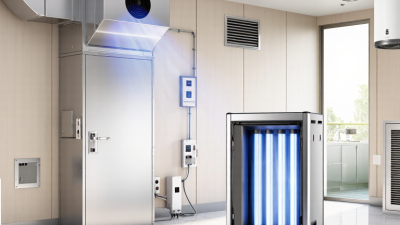
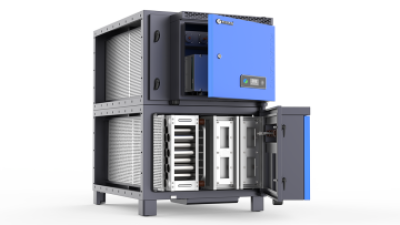
An in-duct cooking oil smoke electrostatic precipitator filter can strengthen this process by electrically charging airborne particles and collecting them on internal plates. With filtration efficiency of up to 98%, the system is designed to reduce cooking smoke, grease aerosols, oil mist, and other contaminants before they travel through the ductwork or discharge outdoors. By limiting grease accumulation, it can help maintain cleaner ventilation components, support more consistent airflow, and improve working conditions for kitchen staff. This type of filtration is suitable for hotel kitchens, restaurants, cafés, fast-food outlets, food courts, central kitchens, and industrial food-preparation facilities where continuous high-temperature cooking creates substantial airborne emissions.
A smoke filter is a barrier that removes airborne particles from exhaust streams. It can capture soot, ash, and fine dust. Some systems also reduce selected gases and odors.
Fabric filters mainly collect particles. Activated carbon can adsorb certain gases and odors. These functions are different and cannot fully replace each other.
A properly designed fabric filter may remove more than 99 percent of particles. Results depend on airflow, temperature, moisture, dust loading, and maintenance. Real conditions can be less perfect.
A system may use a cyclone, fabric filter, wet scrubber, and carbon stage. The cyclone removes heavier dust first. The fabric captures finer particles later.
It gives particles an electrical charge. Metal plates then attract and collect them. This design suits large gas volumes, but sticky dust may reduce performance.
Request laboratory data and field results. Check pressure drop, replacement intervals, fire resistance, and disposal procedures. Ask for measured outlet concentrations, not only efficiency claims.
High pressure drop forces fans to use more energy. It may also reduce airflow. A dirty filter can resemble a blocked window.
Track pressure drop, temperature, airflow, opacity, and outlet concentrations. Inspect seals and gaskets regularly. A small leak can weaken an expensive system.
No. The rating may come from controlled testing. Hot, humid exhaust or changing airflow can lower performance. The number needs operating context.
Dust buildup can increase pressure drop and reduce collection efficiency. Aging filter bags may develop damage or leaks. Maintenance is sometimes treated as an afterthought, which is a mistake.
This article presents the top 10 Smoke Filter suppliers worldwide and explains how their solutions support cleaner air and more effective pollution control. It defines the role of smoke filters in capturing particulate matter, fine dust, and other airborne pollutants from industrial exhaust, while reviewing modern technologies such as electrostatic precipitation, high-efficiency filtration media, wet scrubbing, and hybrid systems. The discussion also outlines key evaluation criteria, including filtration efficiency, energy consumption, durability, maintenance requirements, customization, certifications, and after-sales support.
The article further examines regional market characteristics across major manufacturing and industrial areas, then compares leading suppliers according to technological capability, product range, production capacity, and global service networks without focusing on brand promotion. It also highlights applications in manufacturing, energy, processing, transportation infrastructure, and commercial facilities. Finally, it summarizes relevant environmental standards and practical supplier-selection factors, helping readers choose reliable, compliant, and cost-effective filtration solutions for different operating conditions.