Phone:+8613927702137

Honestly, the global vinyl collection market is getting pickier—and a lot more practical. These days, buyers aren't just looking at how pretty a record is; they care about pressing consistency, sturdy packaging, environmental standards, and whether exports actually arrive reliably. I mean, a gorgeous record can still let you down if the sleeve shows up bent or the surface has that annoying noise. It's the little things that make or break it.
You know, Michael Fremer—veteran vinyl journalist and all-around industry authority—put it pretty well when he said, “Vinyl is a tactile experience, not merely an audio format.” And honestly, that’s exactly why reliable manufacturing matters so much. Think about it: a record isn’t just something you listen to. You touch it, show it off, maybe frame it, and hopefully keep it around for years. That’s where the big names come in—GZ Media, MPO, Pallas Group, Record Technology Incorporated. Each one brings its own strengths to the table, whether that’s pressing, mastering, inspection, or packaging. Of course, what they can do can shift depending on the project, the market, and how many records you’re ordering. Look, if you're buying something, don't just fall for the promises. Compare the actual evidence instead—that's what matters.
So, this guide is all about China’s top Vinyl Collection manufacturers—especially if you’re a buyer sourcing from overseas. We’ll walk through things like production equipment, how materials are controlled, quality checks, customization options, packaging protection, and what the delivery experience is really like. And yes, we also get into Dust Collection practices, since those tiny airborne particles can mess with record surfaces, labels, and even assembly areas. Look, some suppliers can wow you with samples and then kind of drop the ball on communication once a big order comes in. That's worth being honest about. Product photos help, sure, but factory audits and test orders tell you a lot more. Buyers should ask for pressing samples, packaging prototypes, defect standards, and production schedules that actually feel realistic. Cost still matters, obviously, but the cheapest quote can end up costing way more after rework, delays, or damaged shipments. And just so you know, this overview isn't meant to be a perfect ranking. Thing is, manufacturing performance doesn't stay the same—it shifts over time. And honestly, even seasoned buyers can miss one practical detail. So yeah, careful verification is still the safest way to go.
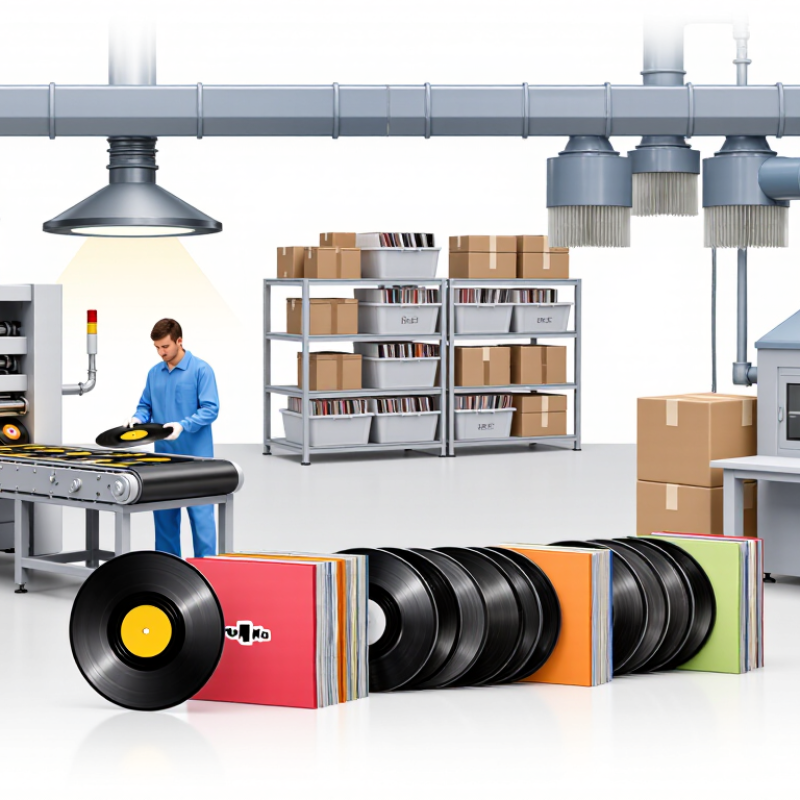
Vinyl collection manufacturing covers more than pressing black discs. It includes audio mastering preparation, lacquer or metal stamper coordination, record pressing, label application, sleeve printing, assembly, inspection, and export packaging. Some factories provide the full chain. Others handle only pressing and packaging. That boundary matters.
According to the IFPI Global Music Report 2024, physical music revenue grew strongly in 2023, with vinyl remaining a major contributor. The RIAA 2023 Year-End Revenue Report recorded United States vinyl revenue at approximately 1.4 billion dollars. These figures show continuing demand for physical collections, but they do not prove that every supplier offers equal technical control.
A qualified Chinese manufacturer should explain its pressing capacity, minimum order quantity, color-mixing limits, test-pressing process, and production schedule. Buyers should also request groove-surface inspection, center-hole tolerance data, and sample photographs under normal lighting. Small details become audible. Packaging deserves similar attention, especially for international shipping, where corner damage and warping can reduce collection value.
The scope can also include custom jackets, inserts, lyric sheets, download cards, numbered editions, and protective mailers. However, “custom” sometimes means only printed artwork, not a fully engineered release. Ask for measurable specifications. Ask again.
Industry reports describe market direction, not factory reliability. A careful buyer still needs samples, written tolerances, and independent quality checks before approving volume production.
Chinese vinyl manufacturers now serve several practical product categories for global buyers. Their core range includes 7-inch singles, 10-inch releases, and 12-inch albums, with standard black, transparent, splatter, and marbled compounds. Some factories also produce picture discs, colored pressings, test pressings, inner sleeves, jackets, and protective outer sleeves. RIAA’s 2023 Year-End Music Industry Revenue Report recorded 43.4 million vinyl units sold in the United States, generating about $1.4 billion in revenue. This demand supports broader customization, but visual effects can sometimes affect pressing consistency.
Packaging is another major category. Chinese suppliers commonly offer coated paper jackets, heavyweight sleeves, gatefold construction, lyric inserts, download cards, and rigid mailers. Buyers should request physical samples, not only digital mockups. Small details matter. Check seam alignment, spindle-hole size, surface noise, and color repeatability. Some manufacturers also supply cleaning accessories, including Vinyl Cleaner, anti-static brushes, and storage sleeves. These products need clear material specifications and safe handling instructions for different record surfaces.
Production capability varies considerably between factories. A supplier may advertise premium output but outsource mastering, plating, or packaging. That is not automatically a problem, yet it should be disclosed. Ask for pressing tolerances, inspection records, carton-drop testing, and a documented approval process. My practical concern is simple: attractive samples can hide inconsistent batch control. Independent quality checks remain worthwhile, especially for large international orders.
Indicative commercial thickness ranges commonly specified for major PVC and vinyl product categories serving global buyers.
Thickness ranges vary by application, construction, reinforcement, and customization requirements.
Global vinyl demand is rising, making manufacturer evaluation more important for international buyers. IFPI’s Global Music Report 2024 recorded 5.3% growth in physical music revenue during 2023. Vinyl remained a major contributor. However, demand alone does not prove factory quality.
Inspect the record compound, not only the finished sleeve. Virgin PVC usually offers cleaner surfaces, while recycled content may introduce noise or visual variation. Ask for material specifications, pressing temperature records, and test-pressing samples. Check groove clarity under strong light. Listen for persistent crackle, warping, or distortion across quiet passages. A factory claiming ISO 9001 certification should provide current documentation and explain its inspection process. Certification helps, but it does not replace physical testing.
Craftsmanship appears in small details. Examine center-hole accuracy, label alignment, edge trimming, and inner-sleeve protection. RIAA’s 2023 Year-End Report valued vinyl revenue at approximately 1.4 billion dollars in the United States. That market value increases pressure for consistent production. Still, one perfect sample can hide unstable batch control. I would request samples from different production dates. Some factories resist this request. That is worth noting.
Tips: Compare three samples from separate batches. Request defect-rate records, not promises. Confirm packaging tests for heat and humidity. Ask who performs final inspection. Leave room for improvement; even careful production can produce occasional surface noise.
Global buyers need more than attractive product samples from vinyl collection manufacturers. Capacity must be measurable. The RIAA reported US vinyl revenue of about $1.4 billion in 2023, with approximately 43.4 million units shipped. This demand pressures pressing plants, packaging suppliers, and quality-control teams.
Ask for monthly output, average lead time, and backup production plans. A reliable factory should explain its pressing workflow, test-pressing procedure, and defect rate. Request evidence from recent production runs. Some capacity claims remain difficult to verify. That is worth questioning. Customization may include 140g or 180g records, colored compounds, printed sleeves, jackets, inserts, labels, and protective packaging. Private label services should cover artwork checks, barcode coordination, sample approval, and shipment inspection. Clear ownership of approved artwork also prevents costly misunderstandings.
Tips: Request one test pressing before mass production. Check center-hole accuracy, surface noise, color consistency, and sleeve alignment. Ask whether Vinyl Cleaning instructions can be included with each package. Confirm carton strength using a drop-test sample. Never judge quality from photographs alone. A small pilot order often reveals communication gaps, packing weaknesses, and inconsistent finishing. Production data should be reviewed against an agreed specification sheet, not informal promises. Supplier audits can also examine worker training, equipment maintenance, and documented corrective actions. These details support a more reliable sourcing decision.
Choosing reliable vinyl collection manufacturers requires more than comparing prices and catalogs. Global buyers should request current certificates, test reports, and factory quality records. ISO 9001 indicates a controlled management system, but it does not guarantee every shipment is flawless. Product testing should match the destination market and intended use. Check dimensions, color stability, tensile strength, surface wear, and Vinyl Emission results where applicable. Ask whether an accredited laboratory performed the tests.
Tips: Request batch samples before placing a large order. Compare the sample with production goods. Confirm material declarations, safety data, and packaging labels. Keep inspection photos and signed reports in one file. This simple habit can prevent costly disputes.
Compliance also requires traceability. Each carton should connect to a production batch, inspection date, and raw material record. Manufacturers should explain how they control recycled content, restricted substances, and changes in suppliers. A capable quality team will show calibrated instruments, written procedures, and retained samples. Visit the factory if possible. Look closely at storage areas, not only the showroom. Poor storage can damage vinyl before shipment. No factory is perfect. Even strong systems may have weak points, such as inconsistent color matching between batches. Buyers should discuss corrective actions honestly and review them after delivery. Certifications matter, but daily discipline matters more.
For global buyers, vinyl collection pricing depends on material, mold complexity, finishing, packaging, and order volume. The RIAA 2023 Year-End Report recorded 43.4 million vinyl units sold in the United States. This demand supports competitive production, but not every quote is efficient. A basic record sleeve may cost less than a rigid display box. Colored compounds, embossed details, and protective inserts raise the factory price. Ask for a landed-cost estimate, not only a unit price.
Minimum order quantities often range from 500 to 5,000 pieces, depending on tooling and production capacity. Smaller orders usually carry higher setup costs. Request a sample before approving bulk production. Check edge quality, print alignment, hinge strength, and Vinyl Odor after opening sealed packaging. Odor can come from plastic additives, inks, adhesives, or poor ventilation. It deserves testing. I would also question unusually cheap offers; savings may hide weaker packaging or inconsistent finishing.
International shipping needs careful planning. Under ICC Incoterms 2020, clarify whether the seller handles export clearance, freight, insurance, and import delivery. Carton dimensions matter because bulky collectibles can incur dimensional-weight charges. The World Bank’s Logistics Performance Index 2023 highlights major differences in customs efficiency and shipment reliability across markets. Use moisture-resistant cartons, corner protection, and clear carton labels. Confirm HS classification with a customs professional. Delivery estimates can still fail during peak seasons, so a small time buffer is sensible. My earlier assumption that air freight was always safer proved too simplistic; sturdy sea freight packaging can reduce damage and cost.
Common formats include 7-inch singles, 10-inch releases, and 12-inch albums.
Yes. Buyers can request colored pressings, picture discs, gatefold jackets, lyric inserts, and rigid mailers.
Check groove clarity, surface noise, warping, distortion, and spindle-hole accuracy.
Request inspection records, defect-rate data, pressing tolerances, and test-pressing samples.
Recycled content may create more surface noise or visual variation.
Examine seam alignment, print registration, hinge strength, inner-sleeve protection, and carton durability.
Minimum orders often range from 500 to 5,000 pieces.
Consider materials, tooling, finishing, packaging, freight, insurance, and import delivery.
Use moisture-resistant cartons, corner protection, and clear carton labels.
Odor may come from plastic additives, inks, adhesives, or poor ventilation.
China’s Vinyl Collection manufacturing industry covers a broad range of products, including decorative records, collectible figures, display items, packaging components, and customized merchandise made from vinyl-based materials. Chinese manufacturers often support both standard and private label projects, allowing global buyers to select product designs, sizes, colors, finishes, packaging, and branding details. When evaluating suppliers, buyers should examine material quality, molding precision, surface finishing, assembly standards, production equipment, and craftsmanship consistency. Samples and factory audits can help verify whether a manufacturer can meet project requirements reliably.
Production capacity, customization flexibility, certifications, and quality-control procedures are also important considerations. Buyers should confirm inspection processes, product safety documentation, applicable compliance standards, minimum order quantities, payment terms, lead times, and shipping arrangements before placing an order. A clear comparison of unit pricing, tooling costs, packaging expenses, transportation fees, and import responsibilities can support accurate budgeting. By assessing these factors carefully, global buyers can select dependable Chinese partners for efficient and compliant Vinyl Collection production.