Leave Your Message
0%

In a busy kitchen, it’s pretty common for haze to fill the air before the lunch rush even wraps up. Smoke tends to drift up and hang around near the ceiling lights, while lingering odors can be pretty noticeable around the service area. And let’s be honest—keeping the workspace comfortable for staff can be a real challenge. A Smoke Filter can do a good job of capturing airborne grease and particles, but only if you pick the right one, install it properly, and keep up with maintenance. It’s not a magic fix, though. How well it works really depends on your cooking equipment, airflow, the design of the filter, and how regularly you clean it.

For a business owner, choosing a Smoke Hood Filter isn’t just about the price tag. You’ve got to dig into the specs—check the manufacturer’s details, make sure it fits your hood right, and think about your airflow needs. It’s a good idea to ask a ventilation pro to check things out, especially if you change your kitchen layout or if your cooking volume ramps up. Little things matter here—a filter that doesn’t sit snugly might let air slip around it, and ignoring a dirty filter can restrict airflow, making things worse. Cleaning is key, and keeping records of maintenance can save you headaches down the line.

Remember though, there’s no one-size-fits-all solution. A cozy café with a small grill probably has different needs compared to a bustling restaurant with multiple cooking stations. So, don’t just go by slick marketing claims promising to wipe out every smell or particle. Results vary, and even the best choices should be checked regularly. After you install a filter, keep an eye on how things are going. Follow the manufacturer’s maintenance tips, and be ready to tweak your setup if your situation changes. When you choose a good Smoke Filter based on real evidence and professional advice, you’re setting your kitchen up for cleaner, healthier operations—and that ultimately makes all the difference.

Why Choose a Smoke Filter for Your Business?

What Smoke Filters Are and How They Capture Airborne Particles

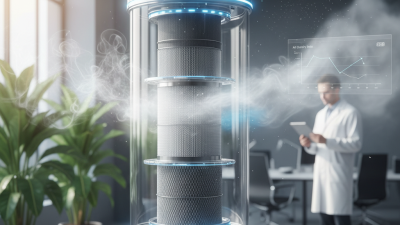
A smoke filter is an air-cleaning device designed to reduce smoke, soot, and other airborne particles. It pulls contaminated air through one or more filtration stages. Larger particles may stop in a prefilter, while finer particles meet a dense mechanical or electrostatic layer. Clean air then returns to the workspace. That matters.

In a business, this process can help control visible haze, residue, and irritating particles near suitable sources. Filter performance depends on airflow, particle size, filter condition, and correct installation. A pressure gauge can reveal rising resistance as dust builds. Staff should inspect seals and replace loaded filters according to measured conditions, not guesswork. Maintenance records also support consistent indoor-air management. Small gaps can matter.

Choosing a smoke filter is not simply choosing the highest advertised efficiency. A very restrictive filter may reduce airflow if the system is not designed for it. Professional assessment should consider room volume, operating hours, heat load, and the type of smoke present. No filter captures everything. Gases and odors may require different treatment, such as activated carbon, while particles need particle filtration. Results should be verified with airflow checks and, when appropriate, indoor air measurements.

Which Smoke Pollutants Matter: PM2.5 and Particles Below 0.1 Micron

Why choose a smoke filter for your business? The answer becomes clearer when looking beyond visible smoke. PM2.5 particles are smaller than 2.5 microns and can remain suspended in workplace air. They may enter deeper areas of the respiratory system.

Particles below 0.1 micron require closer attention. They are often called ultrafine particles and behave differently from larger dust. Their tiny size makes measurement difficult. A basic visual inspection cannot detect them reliably. In practice, an Incinerator Smoke Filter should be selected according to particle size, gas temperature, airflow, and operating hours. Filter efficiency data should come from recognized testing methods, not vague advertising.

I once assumed a clear exhaust plume meant clean output. That assumption was wrong. Some fine particles are invisible, especially under bright outdoor light. A better approach combines suitable filtration with regular inspections, pressure-drop checks, and calibrated particle monitoring. Maintenance records also matter. A blocked filter can reduce airflow and increase energy use. An oversized filter may waste money without improving control. Qualified environmental engineers can help compare test results with local requirements. Even experienced teams sometimes overlook startup conditions, when emissions can change quickly. That detail deserves attention.

How HEPA Filters Are Rated: 99.97% Efficiency at 0.3 Microns

A busy workplace can reveal air problems quickly. Fine smoke settles near vents, desks, and fabric surfaces. Employees may notice odors before instruments detect a clear pattern. A smoke filter offers businesses a practical control point, especially where indoor air changes quickly. The key question is not whether a filter looks powerful. Its tested performance matters.

HEPA filters are commonly rated to remove 99.97% of particles at 0.3 microns. This size is used because it is near the most penetrating particle size for many mechanical filters. It does not promise 99.97% clean air in every room. Real results depend on airflow, filter condition, housing seals, and maintenance. During field inspections, a loose gasket can weaken an excellent filter. Small gaps matter. That detail is easy to miss.

An Electrostatic Smoke Purifier may support smoke control by charging particles and collecting them on internal plates. Its value depends on tested efficiency, ozone control, noise, and cleaning requirements. Businesses should request independent test data and compare ratings with actual operating conditions. A pressure gauge can show when airflow is declining. Staff should record filter changes, odors, and visible dust instead of trusting memory. No system is perfect. Even well-rated HEPA equipment cannot replace source control, fresh-air planning, or regular inspection. Laboratory performance and daily workplace performance may differ.

Why Choose a Smoke Filter for Your Business?

How HEPA filters are rated: filtration-efficiency benchmarks for fine airborne particles.

The U.S. HEPA benchmark is 99.97% efficiency at 0.3 microns. Under EN 1822, H13 and H14 filters are rated at a minimum efficiency of 99.95% and 99.995%, respectively, at their most penetrating particle size (MPPS). Actual smoke filtration performance depends on filter design, airflow, sealing, and maintenance.

What MERV 13 Means Under ASHRAE 52.2: At Least 50% Efficiency for 0.3–1 Micron Particles

Why Choose a Smoke Filter for Your Business?

Indoor smoke can settle on desks, shelves, and ventilation grilles within hours. Employees may notice a sharp odor, hazy windows, or irritated eyes. A properly selected smoke filter can reduce many airborne particles before they circulate through occupied rooms.

MERV 13 is defined under ASHRAE Standard 52.2. For particles measuring 0.3 to 1 micron, it requires at least 50% efficiency. It also requires at least 85% efficiency for 1 to 3 micron particles and 90% for 3 to 10 micron particles. These figures describe tested particle removal, not complete smoke protection. That distinction matters.

Smoke is complicated. It contains fine particles, gases, and odors. MERV 13 mainly addresses particles, while activated carbon may help with certain gaseous contaminants. It is not a universal solution.

Check the equipment first. A denser filter can increase pressure drop and reduce airflow if the system is undersized. In real facilities, I have seen neglected filters become gray, loaded, and visibly restrictive. That result was avoidable.

Measure pressure, inspect seals, and follow a documented replacement schedule. Filter performance also depends on installation quality. Even a strong filter performs poorly when air bypasses its frame.

Choose based on verified test data, system capacity, and the building’s actual smoke sources. A qualified HVAC professional can review airflow, fan capacity, and maintenance records before installation. The practical target is cleaner air without creating a new ventilation problem.

How Smoke Filtration Fits into Workplace Exposure-Control Programs

Why Choose a Smoke Filter for Your Business?

A Smoke Cleaning Solutionshould support a workplace exposure-control program, not replace it. OSHA’s hierarchy of controls places engineering controls above administrative rules and personal protective equipment. Local Exhaust Ventilation is one practical example. It captures smoke near the source, before it spreads across benches, faces, and air returns.

Capture matters. In welding areas, NIOSH reports that fumes may contain metals and gases with different health hazards. The IARC Monographs, Volume 118, classifies welding fumes as carcinogenic to humans. That finding makes source control more than a cleanliness choice. A properly selected filter can reduce visible particles, protect nearby workers, and keep extraction points closer to the emission zone. However, filter performance depends on airflow, hood position, maintenance, and the actual process.

Measure before guessing. Workplace exposure sampling should identify contaminants and compare results with applicable occupational limits. OSHA guidance also emphasizes ventilation inspection and effective capture. A filter loaded with dust may still run quietly while performing poorly. That is easy to miss. Document pressure readings, airflow checks, filter changes, and worker observations. NIOSH’s hierarchy also warns that no single control works everywhere. A small enclosed room, a hot cutting operation, and a mixed-metal workshop need different assessments. I would not treat a clean-looking floor as proof of safe air. Recheck the system when production changes.

Why Choose a Smoke Filter for Your Business? - How Smoke Filtration Fits into Workplace Exposure-Control Programs
Control Element Relevant Smoke or Aerosol Typical Technical Data Role in an Exposure-Control Program Implementation and Verification
Source Capture Welding fume, soldering smoke, brazing emissions, and localized process aerosols Local exhaust ventilation (LEV) captures contaminants at or near the point of generation Preferred engineering control because it prevents contaminants from dispersing through the breathing zone and surrounding workspace Position the hood close to the source; inspect airflow, ducting, hood condition, and capture performance at scheduled intervals
HEPA Filtration Fine particulate matter and solid or liquid aerosols present in smoke and fumes A true HEPA filter is commonly rated at a minimum efficiency of 99.97% for 0.3 micrometre particles under the applicable test method Provides high-efficiency removal of fine particles when used in a properly designed and maintained filtration unit Confirm the filter classification, airflow rating, pressure drop, housing seal, and replacement condition; HEPA filtration does not remove gases or vapors
MERV-Rated Filtration General recirculated-air particles, including a portion of fine smoke particles MERV 13–16 filters provide progressively higher particle-capture performance than lower-rated filters, subject to system airflow and pressure limitations Can improve central HVAC particle control and support a broader indoor-air-quality strategy when the HVAC system can accommodate the added resistance Verify compatibility with the air-handling unit, fan capacity, filter fit, pressure drop, and actual maintenance schedule
Activated Carbon Selected gases, vapors, odors, and organic compounds that may accompany smoke Adsorption capacity depends on carbon mass, contaminant concentration, humidity, contact time, and breakthrough behavior Complements particulate filtration when the process produces gaseous contaminants; it is not a substitute for particulate or source-control measures Select media for the identified contaminant; establish change-out criteria because odor is not a reliable indicator of remaining capacity
Portable Air Cleaning Residual airborne particles in areas where source capture is incomplete or impractical Clean air delivery depends on airflow and filter efficiency; a useful comparison is CADR or calculated clean-air delivery rate Acts as a supplemental engineering control and may reduce background particle concentration, but it does not replace LEV at the emission source Place the unit so airflow does not disturb source capture; document operating hours, airflow setting, filter loading, and room coverage
Exposure Assessment Worker exposure to airborne particulates, metals, gases, or vapors generated by the process Use representative personal or area sampling and compare results with applicable occupational exposure limits Determines whether existing controls are adequate and identifies tasks, workers, or process conditions requiring additional measures Evaluate normal and upset conditions, production changes, maintenance activities, and worker proximity to the emission source
Filter Maintenance Loaded filters, damaged seals, bypass leakage, and reduced airflow Filter pressure drop generally increases as particulate loading accumulates; the actual limit depends on equipment design Maintains filtration performance and prevents a filter unit from becoming an ineffective or overloaded control Use differential-pressure indicators where available; replace filters according to measured condition, manufacturer limits, and documented inspection results
Administrative Controls Tasks with variable emissions, intermittent smoke, or changing production conditions Written procedures, training, restricted access, housekeeping, and preventive maintenance support engineering controls Reduces the likelihood that workers will bypass, misuse, or work outside the intended operating conditions of the filtration system Train employees on hood positioning, alarm response, filter-change procedures, waste handling, and reporting of visible smoke or system faults
Personal Protective Equipment Residual exposure after feasible engineering and administrative controls are applied Respirator selection must be based on the contaminant, concentration, oxygen conditions, assigned protection factor, and a written respiratory-protection program Provides the last line of defense and should not be used as the primary replacement for effective source capture and filtration Where required, include medical evaluation, fit testing, training, cartridge-change procedures, cleaning, storage, and program evaluation
Technical note: Filtration performance is affected by particle size, airflow, filter loading, installation quality, bypass leakage, humidity, and contaminant chemistry. A smoke-filtering strategy should follow the hierarchy of controls: eliminate or substitute the hazard where feasible, use source capture and other engineering controls, apply administrative controls, and use personal protective equipment for remaining exposure.

How to Select, Install, and Maintain a Commercial Smoke Filter

Why Choose a Smoke Filter for Your Business?

Selecting a commercial smoke filter starts with identifying the smoke source, airflow volume, and operating schedule. Cooking vapors, welding particles, and wildfire smoke require different filtration strategies. A high-efficiency rating is not automatically the right answer. Pressure drop can increase energy use and reduce ventilation performance.

The U.S. Environmental Protection Agency reports that indoor pollutant levels can be two to five times higher than outdoors. During unusual events, concentrations may become much higher. Use ASHRAE Standard 52.2 test data to compare particle removal performance. Also check airflow capacity, filter dimensions, gasket quality, and the equipment’s maximum pressure allowance. Do not confuse particle filtration with complete Smoke Elimination. Gases and odors may require additional media, while heat and grease demand specialized commercial Exhaust Controls.

Installation needs care. Seal gaps around the frame, confirm airflow direction, and record the initial pressure reading. A loose filter can look installed but perform poorly. Maintenance teams should inspect filters according to loading, not guesswork. EPA guidance supports regular inspection and replacement when filters are visibly dirty or airflow declines. Many facilities overlook the pre-filter, which can shorten the life of the main filter. Keep a simple log with dates, pressure readings, and replacement reasons.

Small mistakes matter. A practical review every quarter may reveal blocked grilles, damaged seals, or an unsuitable filter grade. The process is rarely perfect. Recheck it after seasonal smoke events.

FAQS

What does a commercial smoke filter remove?

It reduces smoke, soot, and airborne particles. Larger particles stop in a prefilter. Finer particles meet dense mechanical or electrostatic layers. It does not remove everything.

How does a smoke filter work?

The system pulls contaminated air through several filtration stages. Cleaned air returns to the workspace. Seals and airflow strongly affect real performance. Small gaps matter.

What does a 99.97% rating at 0.3 microns mean?

It describes tested particle removal at a specific particle size. It does not promise identical results throughout every room. Airflow, filter condition, housing seals, and maintenance can change performance.

Is the highest efficiency filter always the best choice?

No. A highly restrictive filter may reduce airflow and increase energy use. Selection should consider room size, operating hours, heat load, and smoke type. The strongest rating may be unsuitable.

Can particle filters remove odors and gases?

Not reliably. Particle filters target solid and liquid particles. Odors and gases may need activated carbon or another treatment stage. A clean-looking filter can still leave odors behind.

How should a smoke filter be installed?

Confirm the airflow direction and seal the frame carefully. Record the initial pressure reading. Check the gasket, grille, and housing for visible gaps. Installation can look correct but still fail.

When should filters be inspected or replaced?

Inspect them according to loading, pressure changes, visible dirt, and reduced airflow. Keep dates, pressure readings, and replacement reasons in a simple log. Guesswork is convenient, but unreliable.

What maintenance details are easy to overlook?

Staff often overlook the prefilter, damaged seals, and blocked grilles. These problems can shorten main-filter life. Review the system every quarter. Recheck it after seasonal smoke events.

How can a business judge real-world filter performance?

Compare tested data with actual airflow and operating conditions. Look for settled dust, visible haze, changing odors, and rising pressure. Laboratory results may not match daily workplace performance. Reassessment is wise.

Conclusion

A Smoke Filter is a practical solution for reducing airborne particles and improving indoor air quality in commercial environments. It works by drawing contaminated air through layered media that capture smoke, fine dust, and other suspended pollutants. Particular attention should be given to PM2.5 and particles smaller than 0.1 micron, which can remain airborne for long periods and may be difficult to remove without suitable filtration. HEPA filters are commonly rated at 99.97% efficiency for particles measuring 0.3 microns, while a MERV 13 filter, under ASHRAE 52.2 testing, provides at least 50% efficiency for particles in the 0.3–1 micron range.

Smoke filtration should support, rather than replace, a broader workplace exposure-control program that includes source reduction, ventilation, monitoring, and employee protection. Businesses should select equipment according to room size, airflow requirements, filter performance, and operating conditions. Correct installation is essential to prevent air bypass, while regular inspections, pressure checks, and timely filter replacement help maintain efficiency and reliable long-term performance.
Sophia

Sophia

Sophia is a dedicated marketing professional at Foshan KLC Environmental Technology Co., Ltd., where she plays a pivotal role in promoting the company’s innovative solutions for environmental protection. With a strong expertise in the company's product offerings, she consistently delivers......
Previous How to Choose the Best Plant Air Cleaner?