Phone:+8613927702137

Picking out the right Air Handling Unit (AHU) can really make a difference when it comes to a building’s comfort, safety, and running costs. Basically, it controls airflow, temperature, humidity, and Filters — all in one integrated system. For instance, in a busy warehouse, a good AHU can keep temperatures stable near loading docks. Or in an office, it can help cut down on drafts and stale air. Because let’s be honest, clean air really does matter, right?
When you choose the right unit and pair it with the proper filters and treatment gear, it can support industrial Air Purification quite nicely. But don’t expect it to fix every indoor air problem on its own. Engineers need to take into account things like how many people are in the space, any emissions from equipment, outdoor air quality, room pressure, and how easy it is to do maintenance. The ASHRAE guidelines give a solid technical backup, but every facility is unique, so you gotta verify on-site. During commissioning, technicians should measure airflow, pressure drops, temperature, and how well filters perform. Those readings are way more reliable than just trusting what a catalog claims.
And let’s not forget about energy. Features like variable-speed fans, heat recovery systems, and demand-controlled ventilation can save a good chunk of energy during slower periods. But be careful — if staff aren’t trained properly, those advanced controls can just cause confusion. It’s best to keep the system straightforward enough to understand and operate. Maintenance access, alarms, and replacement filters should be easy to handle, and spare filters must always be available. Honestly, I wouldn’t just go with the cheapest quote—it might seem like a good deal at first, but poor efficiency or skipped maintenance can end up costing more down the line. No system is perfect, so facility managers should also think about changing production needs, seasonal shifts, or future expansion plans before giving the green light. Taking this kind of thoughtful, big-picture approach ensures the AHU will reliably do its job, rather than just looking good on paper.
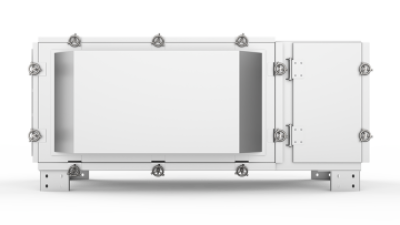
An air handling unit, or AHU, is the facility’s central air-processing system. It receives outdoor and return air, filters particles, adjusts temperature, and distributes conditioned air through ductwork. Inside the cabinet, fans, coils, dampers, filters, and controls work together. Some systems also manage humidity and heat recovery.
In practical facility inspections, an AHU can reveal problems quickly. A loaded filter may darken near the intake and force the fan to work harder. Poorly sealed doors can allow unfiltered air into clean areas. Correct sizing matters because an undersized unit may struggle during hot afternoons or crowded shifts. A Kitchen Air Cleaner can support local contaminant control, but it does not replace balanced ventilation. An AHU is not a magic box. Its performance depends on design, commissioning, maintenance, and real operating conditions. Even experienced teams sometimes overlook noise, access space, or uneven airflow between rooms.
Tips: Check filters, belts, coils, drain pans, and fan readings on a planned schedule. Record pressure drops instead of relying only on visual inspections. Keep service panels accessible and label dampers clearly. Verify airflow after renovations, because new walls or equipment can change air distribution. Review sensor readings against actual room conditions. A comfortable thermostat reading may hide stagnant air near a workstation. Choose an AHU with suitable filtration, efficient controls, corrosion resistance, and enough service space for safe maintenance.
An air handling unit, or AHU, is the facility’s breathing system. It receives return air from occupied rooms, removes contaminants, and mixes it with outdoor air. Dampers control this balance. The mixed air then passes through filters, cooling or heating coils, and a fan. Finally, supply ducts deliver conditioned air through ceiling diffusers or floor grilles.
The process is continuous, but not always simple. Sensors measure temperature, humidity, carbon dioxide, and pressure. A control system adjusts airflow when rooms fill or loads change. During mild weather, an economizer may increase outdoor air for cooling. According to the U.S. Environmental Protection Agency, indoor pollutant levels can be two to five times higher than outdoors. Filtration and ventilation therefore affect comfort and health, not just temperature.
Energy use deserves equal attention. The U.S. Department of Energy estimates that HVAC systems can represent about 40% of commercial building energy consumption. The International Energy Agency reports that buildings consume roughly 30% of global final energy. A dirty filter raises pressure across the unit. An oversized fan wastes power. Small faults become expensive. In practice, balancing airflow can be imperfect, especially after renovations. Operators should verify readings at diffusers, inspect coils, and review control settings instead of trusting the screen alone.
An air handling unit (AHU) does far more than move air through ducts.
It conditions, filters, mixes, and distributes air across occupied zones. Its coils adjust temperature and humidity. Dampers regulate outdoor and return-air proportions. Fans maintain pressure for stable delivery. In facility commissioning, technicians often find a simple fault: clogged filters increase fan effort and weaken airflow.
Air quality is another core function. Filters capture particles, while controlled outdoor air dilutes carbon dioxide, odors, and other contaminants. Some systems add ultraviolet treatment or Exhaust Air Cleaning, giving exhaust streams targeted filtration before discharge.
The U.S. Environmental Protection Agency reports that people spend about 90% of their time indoors. That makes ventilation performance highly consequential. Yet more outdoor air is not automatically better. It can increase heating or cooling demand, especially in humid climates.
Energy control depends on thoughtful sequencing.
The International Energy Agency’s 2023 Global Status Report states that buildings consume about 30% of global final energy. They also create roughly 26% of energy-related emissions.Heat recovery wheels or plates can reclaim energy from Exhaust Air. Variable-speed fans can respond to occupancy instead of running fully. Still, sensors drift, filters load, and controls can be poorly tuned. An AHU needs measured airflow, verified temperatures, and regular maintenance.Impressive specifications may perform poorly in the plant room.
Choosing an air handling unit (AHU) gives a facility controlled movement, filtration, heating, and cooling. In a real plant, that control matters. Operators can adjust airflow when occupancy, dust, or process loads change. The U.S. Department of Energy reports that ventilation and air-conditioning can represent about 40% of commercial building energy use. A suitable AHU can reduce waste through variable-speed fans, heat recovery, and demand-based ventilation. It can also support Exhaust Air Filtration when contaminated air requires treatment before discharge. Better control. Fewer surprises.
The International Energy Agency reported that building operations consumed nearly 30% of global final energy in 2022. This makes equipment efficiency a practical concern, not just a design preference. Select an AHU according to airflow, static pressure, humidity, filtration level, and maintenance access. Field experience shows that cramped filter sections create avoidable service delays. Sensors also need calibration. Otherwise, automatic control may become expensive guesswork. The choice is not always perfect. Review actual operating conditions after installation.
Tips: Measure seasonal loads before sizing the unit. Leave clear space for filter replacement and coil cleaning. Check fan energy at normal, not only maximum, airflow. Record pressure readings during commissioning. Revisit the settings after three months.
An air handling unit can combine outdoor-air delivery, filtration, heating, cooling, and humidity control in one coordinated system. The chart shows the ventilation-rate components used for selected space types.
Reference values: ASHRAE 62.1-2022, Table 6-1. Values show minimum outdoor airflow components before occupancy diversity and final system design calculations. Actual requirements depend on occupancy, floor area, local codes, and operating conditions.
Choosing an air handling unit (AHU) begins with the facility, not the equipment brochure. A hospital, warehouse, school, and cleanroom demand different airflow strategies. Start with occupancy, floor area, ceiling height, and operating hours. Then examine outdoor air requirements, filtration targets, humidity limits, and heat loads. These details shape fan capacity, coil selection, controls, and cabinet configuration. Miss one variable, and energy use may rise quietly.
Climate is equally important. A humid coastal site needs corrosion resistance and strong moisture removal. A cold inland facility may need freeze protection and reliable preheating. Dust, chemical vapors, noise limits, and available service space also affect selection. During site assessments, I measure access routes and maintenance clearances before approving dimensions. An AHU that fits on paper can fail at the doorway. That mistake is avoidable, but it still occurs.
Performance data should be checked under real operating conditions, not only rated points. Review airflow at peak demand, part-load efficiency, filter pressure drop, and sound levels. Ask for test records, control sequences, and clear maintenance procedures. Independent engineering review can expose optimistic assumptions. I also prefer space for future filter changes and sensor upgrades. Perfect forecasts are rare. A practical selection leaves room for uncertainty, seasonal changes, and lessons learned after commissioning.
| Facility Factor | Typical Facility Data | How It Guides AHU Selection | Recommended AHU Considerations |
|---|---|---|---|
| Facility Type and Use | Offices, schools, retail areas, warehouses, laboratories, healthcare spaces, and production areas have different occupancy and ventilation profiles. | The use of the space determines airflow volume, filtration, pressure relationships, operating schedules, and temperature or humidity control requirements. | Select an AHU configuration based on zoning, required air cleanliness, supply-air temperature, exhaust relationships, and process requirements. |
| Occupancy Density | Typical occupied areas may range from approximately 5 to 15 m² per person, depending on the facility layout and activity. | Higher occupant density increases ventilation demand, sensible heat gain, latent moisture generation, and carbon dioxide control requirements. | Use demand-controlled ventilation where appropriate, provide accurate occupancy schedules, and ensure the outdoor-air section can meet peak demand. |
| Outdoor-Air Requirement | Outdoor-air requirements are commonly calculated from both people-based and floor-area-based ventilation rates; the applicable local standard determines the final value. | The required outdoor-air fraction affects fan capacity, coil size, heating and cooling energy, and air-treatment equipment. | Specify a properly sized mixing box, outdoor-air damper, low-leakage dampers, accurate airflow measurement, and sufficient coil capacity for ventilation loads. |
| Airflow and Air Changes | General occupied spaces often use approximately 2 to 8 air changes per hour, while healthcare, laboratory, and controlled environments may require higher rates. | Higher airflow rates increase fan energy, duct size, filter area, coil capacity, and space requirements for the AHU. | Size the supply and return fans for design airflow plus system resistance, while considering variable-air-volume control and minimum turndown limits. |
| Indoor Temperature Setpoints | Many comfort applications operate near 20–24°C in heating or cooling seasons, subject to local comfort criteria and facility use. | The indoor setpoint and outdoor design condition determine heating and cooling coil loads and supply-air temperature. | Use project-specific psychrometric calculations, adequate coil rows, frost protection where necessary, and controls capable of maintaining stable discharge-air temperature. |
| Humidity Control | Comfort applications commonly target approximately 30–60% relative humidity, while sensitive facilities may require narrower limits. | Humidity requirements influence cooling-coil dew-point selection, reheat, humidification, condensate management, and control complexity. | Consider a dedicated outdoor-air unit, deeper cooling coils, modulating humidification, reheat control, vapor-tight insulation, and reliable condensate drainage. |
| Filtration and Air Cleanliness | Common commercial systems use a prefilter plus a higher-efficiency final filter; sensitive areas may require high-efficiency filters and terminal filtration. | Higher filtration efficiency increases pressure drop, fan power, filter replacement cost, and the required filter-face area. | Allow space for staged filtration, differential-pressure monitoring, safe filter access, gasketed frames, and fan selection based on clean and loaded filter resistance. |
| Pressure Relationships | Clean areas are often maintained positive to adjacent spaces, while restrooms, isolation rooms, and odor-generating areas may require negative pressure. | Pressure control determines supply, return, and exhaust airflow offsets, as well as the required control sequence. | Provide independent exhaust where needed, pressure sensors, balanced airflow control, appropriate door undercuts or transfer paths, and alarm functions. |
| Climate and Outdoor Design Conditions | Outdoor design temperatures and humidity vary significantly by location; coastal, hot-humid, cold, and high-altitude climates create different design loads. | Climate affects coil selection, freeze protection, casing insulation, corrosion resistance, condensate removal, and seasonal operating strategy. | Use local design weather data, include winter freeze protection where applicable, and select casing and coil materials suitable for the environment. |
| Energy Recovery Potential | Facilities with substantial outdoor-air or exhaust-air volumes can have significant ventilation heating and cooling loads. | Energy recovery can reduce conditioning loads, but its value depends on operating hours, climate, exhaust contaminants, and allowable cross-contamination risk. | Evaluate sensible or total-energy recovery, pressure-drop impact, frost control, bypass operation, leakage, cleaning access, and contaminant transfer risk. |
| Operating Schedule and Load Variation | Facilities may operate continuously, on extended shifts, or only during scheduled occupancy; loads can vary substantially during the day. | Variable loads affect fan speed, ventilation demand, coil control, start-up sequences, and energy consumption. | Use variable-speed drives, occupancy or air-quality sensors, optimum start/stop logic, adjustable outdoor-air control, and low-load stability verification. |
| Available Plant Space | AHUs may be installed indoors, outdoors, on rooftops, or in mechanical rooms with restrictions on footprint, height, access, and service clearances. | Space constraints influence whether the unit is packaged, modular, horizontal, vertical, split into sections, or located remotely from the served zones. | Reserve access for filter and coil removal, fan maintenance, cleaning, drainage, lifting, replacement routes, and future capacity expansion. |
| Noise and Vibration Limits | Offices, classrooms, healthcare areas, and recording or testing spaces typically require lower background noise than industrial areas. | Fan speed, static pressure, casing construction, duct velocity, and equipment location directly affect sound levels and vibration transmission. | Select low-noise fans, acoustic lining or silencers where suitable, flexible connections, inertia bases, vibration isolators, and low-velocity duct layouts. |
| Redundancy and Reliability | Critical facilities may require continuous operation, maintenance without shutdown, or recovery from a single equipment failure. | Reliability requirements determine whether the system needs standby capacity, multiple AHUs, dual power supplies, or segregated air paths. | Evaluate N+1 or duty-standby arrangements, automatic changeover, emergency power, isolation dampers, fault alarms, and maintainability during operation. |
| Maintenance and Life-Cycle Cost | Routine tasks include filter replacement, coil cleaning, belt or bearing inspection, drain-pan cleaning, sensor calibration, and control-system checks. | Maintenance frequency and energy use can have a greater long-term impact than initial equipment cost. | Compare total cost of ownership, provide access doors and service lighting, monitor filter pressure drop, and select durable components with readily available service parts. |
An air handling unit supports cleaner, more comfortable facility air when installation matches the building’s real needs. Before delivery, verify airflow requirements, service clearances, drainage points, electrical capacity, and filter access. A cramped mechanical room creates problems later. It makes routine work slower and riskier.
Set the unit on a level, vibration-controlled base. Connect ducts carefully, then seal joints to reduce leakage. Install sensors where they measure representative air, not heat from nearby equipment. During commissioning, technicians should check airflow, pressure, temperature, noise, and condensate drainage. In food-service areas, a Restaurant Air Cleaner may support odor and particle control, but it should complement proper ventilation rather than replace it. Small installation errors can remain unnoticed for months.
Tips: Record filter sizes, motor readings, and cleaning dates. Inspect filters monthly in dusty or busy facilities. Replace them when pressure drop rises, not only by calendar schedule. Clean coils and drain pans before buildup becomes visible. Check belts, bearings, dampers, and insulation during service visits. Keep outdoor-air intakes away from exhaust outlets and standing water. A written log improves accountability.
Maintenance plans are rarely perfect. Occupancy changes, renovations, and seasonal humidity can expose weak assumptions. Review operating data after unusual events, and adjust schedules carefully. Trained personnel should follow site procedures and applicable safety requirements. Never bypass alarms just to keep the unit running.
Gas air filtration and heat recovery are becoming important priorities for stenter machines as textile manufacturers seek to reduce energy consumption and improve environmental performance. During fabric finishing, stenters release hot exhaust air that may contain oil mist, lint, moisture, and other process residues. A properly designed gas air filter can help remove these contaminants, protecting heat-exchange surfaces and supporting cleaner exhaust management. Insights commonly emphasized in IEA and Textile Exchange reports include improving energy efficiency, reducing emissions, and adopting practical technologies that support more responsible textile production.
A stenter waste heat recovery system captures thermal energy from the exhaust stream and transfers it to incoming fresh air or process air. This recovered heat can reduce the fuel required to reach operating temperature, helping lower production costs and associated carbon emissions. When combined with effective filtration, the system can maintain stable heat-transfer performance, reduce fouling, and support consistent fabric quality. Key selection considerations include heat recovery efficiency, resistance to corrosion and high temperatures, pressure loss, filter maintenance, condensate control, and compatibility with existing ventilation and exhaust equipment.
For textile dyeing and finishing facilities, integrating filtration with heat recovery offers a practical route toward improved resource efficiency. Regular inspection and cleaning are essential for maintaining airflow, safety, and long-term operating performance.
An air handling unit processes and distributes air throughout a building. It filters, heats, cools, and sometimes controls humidity. Fans, coils, dampers, filters, and sensors work inside its cabinet. It is not a magic box.
Filters capture airborne particles. Controlled outdoor air dilutes carbon dioxide, odors, and other contaminants. However, excessive outdoor air can increase heating and cooling demand. More ventilation is not always better.
A clogged filter increases pressure drop and makes the fan work harder. Airflow may weaken in distant rooms. The filter can appear dark near the intake. Pressure readings reveal problems better than appearance alone.
Inspect filters, belts, coils, drain pans, fans, and sensors on a planned schedule. Record pressure drops and fan readings. Replace damaged parts promptly. A visual check can miss important faults.
An undersized unit may struggle during hot afternoons or crowded work periods. An oversized unit may cycle poorly and control humidity unevenly. Real occupancy, climate, and room use should guide selection.
No. A thermostat may show a comfortable temperature while air remains stagnant near a workstation. Compare sensor readings with actual room conditions. Check airflow, odors, and occupant feedback too.
Variable-speed fans can match airflow with occupancy. Heat recovery devices can reclaim energy from exhaust air. Good control sequencing matters. Poorly tuned sensors can waste energy despite efficient equipment.
Verify airflow after adding walls, equipment, or partitions. These changes can create uneven air distribution. Check dampers, supply grilles, return paths, and room pressure. The original design may no longer fit.
An Air Handling Unit (AHU) is a central system that conditions and circulates air throughout a facility. It typically draws in outdoor and return air, filters contaminants, regulates temperature and humidity, and distributes the treated air through ductwork. Depending on the design, an AHU may also provide ventilation, heating, cooling, air mixing, energy recovery, and pressure control, helping create a healthier, more comfortable, and more productive indoor environment.
Choosing an Air Handling Unit can improve air quality, operational efficiency, and climate control across offices, commercial buildings, healthcare spaces, and industrial facilities. The right selection depends on building size, occupancy, airflow requirements, local climate, energy targets, available space, noise limits, and maintenance access. Proper installation should include suitable positioning, secure duct and electrical connections, effective insulation, and balanced airflow. Regular filter replacement, coil cleaning, inspection, and performance testing are essential for reliable operation, long service life, and consistent indoor comfort.