


Cylindrical vs. Plate Electrostatic Precipitators: Efficiency, Applications & Differences
The origins of modern industrial electrostatic Exhaust Purification equipment and electrostatic precipitation technology can be traced back to traditional electrostatic precipitators, widely used for dust control in heavy industries like power plants, steel mills, and construction materials production. With technological advancements, electrostatic precipitators are evolving toward larger-scale designs and wider electrode spacing. Traditional designs typically have electrode gaps under 300 millimeters, whereas wide-spacing technology increases the gap to 400 millimeters or more.
With the continuous improvement of environmental protection standards, air pollution control technology has garnered widespread attention. Among various Air Purification equipment, electrostatic precipitator has become the preferred choice for industrial fume treatment and commercial kitchen smoke purification due to their high-efficiency particulate capture capabilities and low operating resistance.
Two main designs of electrostatic precipitators are commonly used, the electrostatic precipitator with cylindrical filter cell and the electrostatic precipitator with plate filter cell. While both utilize the basic principle of electrostatic adsorption, there are significant differences in their design, performance, and application scenarios.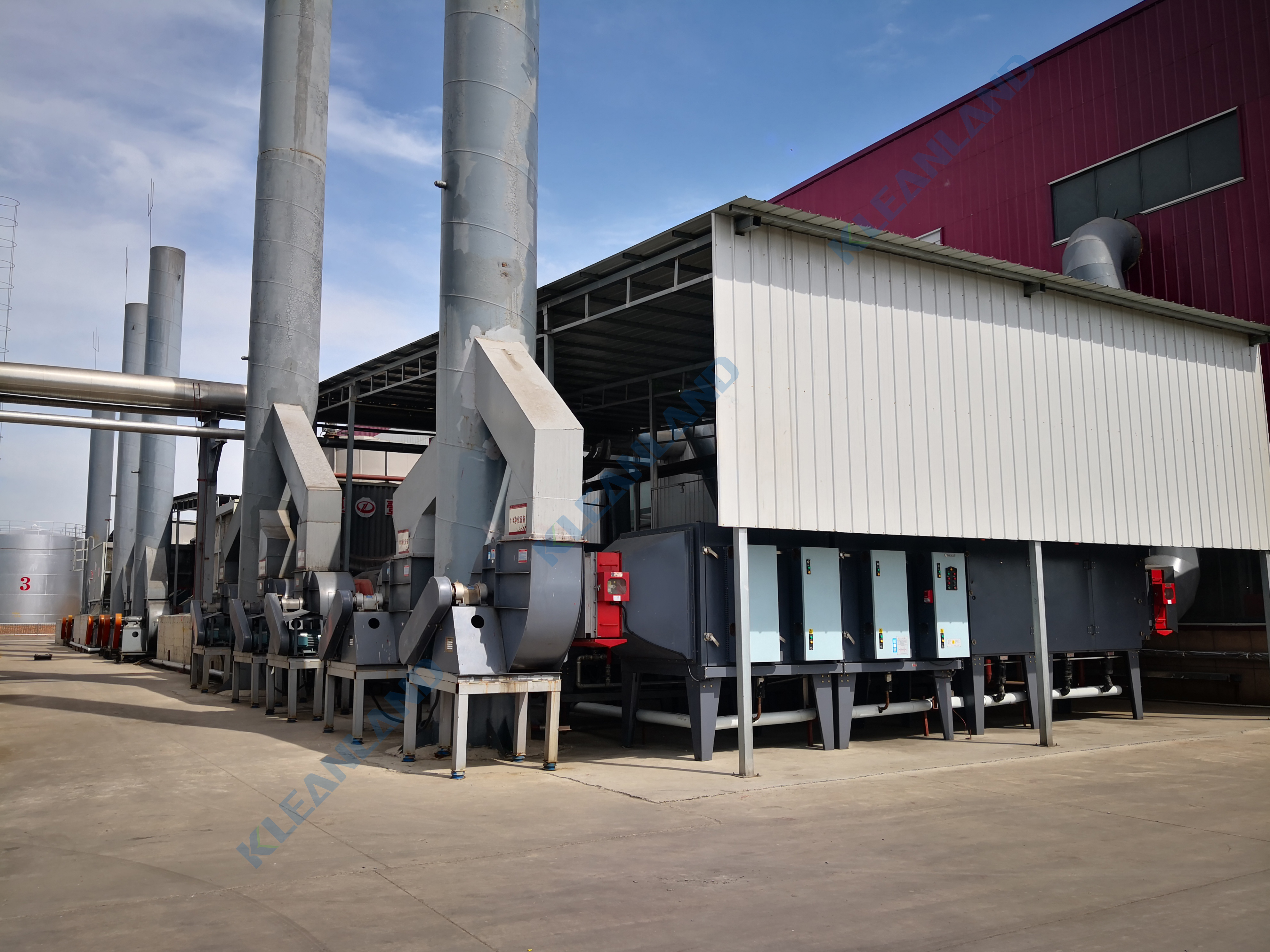
I. Working Principles of Electrostatic Precipitators
Electrostatic precipitators’ function is using a high-voltage electric field to ionize the gas passing through, causing particles to become charged and then adsorbed onto the dust collection electrode, thereby purifying the air. Although the basic principle is same between the two types, their structural designs lead to notable differences.
1. Electrostatic Precipitator with Cylindrical Filter Cell
This type of electrostatic precipitator consists of one or more concentric cylinders, with a cathode needle serving as the discharge electrode (typically a fine wire or needle structure) and the outer cylinder acting as the anode dust collection electrode. During operation, the inner cathode needle generates a strong electric field through a high-voltage power supply. The gas is ionized within this field, and suspended particles become charged and are strongly adsorbed onto the inner wall of the cylinders, achieving efficient purification.
This design enables airflow to pass uniformly through the electric field area along a circular path, effectively avoiding issues such as uneven or biased airflow that may occur in traditional flat plate designs. As a result, particles are maximally exposed to the electric field, improving purification efficiency.
2. Electrostatic Precipitator with Plate Filter Cell
This type of electrostatic precipitator consists of a set of parallel metal plates, with cathode discharge plates and anode dust collection plates arranged in the same ionized zone at a fixed distance. A high-voltage electric field ionizes the gas as it passes through, and the charged particles are adsorbed onto the anode plates. The parallel plate design provides a large effective purification area, making it suitable for handling high concentrations of flue gases and large air volumes containing particulate matter.
Although the two types share the same basic principle, their different structural designs result in distinct performance characteristics and application scopes.
II. Technical Characteristics
1. Characteristics and Applications of Electrostatic Precipitator with Cylindrical Filter Cell
Structural Features:
The cylindrical design is well-suited for complex airflow environments, performing exceptionally in conditions of high humidity, unstable particle concentrations, or significant airflow fluctuations.
Airflow Uniformity:
The cylinder's ring-shaped structure ensures evenly distributed airflow, avoiding problems like concentrated or uneven airflow distribution.
Commercial Adaptability:
The compact circular structure makes the equipment space-efficient and ideal for installation in small-scale restaurants, shopping malls, and other locations with limited space.
Due to its strong ability to capture small particles, it is commonly used in industrial flue gas purification, high-class restaurants, or demanding flue gas purification fields. Cylindrical electric filter cells are typically more expensive to manufacture, mainly due to the fact that the cylindrical structure generates stronger currents and voltages in operation and requires a complex cylindrical structure to support the high-precision discharge electrode arrangement.
2. Characteristics and Applications of Electrostatic Precipitator with Plate Filter Cell
Structural Features:
The parallel plate design provides a larger effective electric field area, making it well-suited for handling high concentrations of particulate matter and large airflow volumes.
High Purification Efficiency:
With a larger dust collection area, the plate filter cell design excels in particle removal efficiency, particularly when dealing with fine particles.
Strong Industrial Applicability:
These devices are widely used in industrial settings such as steel mills, thermal power plants, and chemical plants, where large floor space is available.
Plate electric filter cells are designed to be more suitable for the treatment of small gas volumes and are usually applied to the treatment of flue gases from large industrial emissions, such as the cleaning of soot from coal-fired boilers or the treatment of highly concentrated dusts. The cost of the plate electric filter cell is usually low, and it is favoured by most due to its simple structure, which operates with a low current voltage and does not require a complex electric field structure. Additional protective measures may be required in case of certain complex gas composition conditions.
The core principle of both types lies in electrostatic adsorption technology, but their structural differences dictate varied performance characteristics and application scenarios.
III. Technical Challenges
1. Limitations of Electrostatic Precipitator with Cylindrical Filter Cell
Airflow Speed Sensitivity:
If the airflow speed is too fast, particles may not be sufficiently charged before exiting the electric field, reducing purification efficiency.
Electric Field Strength and Electrode Spacing:
Improper design of the spacing between electrodes can weaken the electric field, reducing its ability to ionize gas effectively and impacting overall dust removal performance.
2. Limitations of Electrostatic Precipitator with Plate Filter Cell
Large Floor Space Requirements:
The extensive structure occupies significant space, making it unsuitable for environments with limited installation areas.
High Airflow Requirements:
Additional deflector devices are needed to ensure even airflow distribution. Uneven airflow can lead to inefficiencies and deviations in purification performance.
Complex Maintenance:
Cleaning multiple parallel plates is time-consuming and labor-intensive, leading to higher maintenance costs and requiring professional operation.
IV. Conclusion
Both the electrostatic precipitator with cylindrical filter cell and with plate filter cell offer unique advantages and limitations, and users should select the appropriate type based on their specific needs and environmental requirements.
The electrostatic precipitator with cylindrical filter cell, with its compact structure, uniform airflow distribution, easy maintenance, and cost-effectiveness, is particularly suitable for small and medium-scale users or locations with limited space. On the other hand, the electrostatic precipitator with plate filter cell dominates large-scale industrial applications due to its strong processing capacity and high purification efficiency.
As environmental protection standards continue to evolve, both technologies will be further optimized to address air pollution challenges more effectively.